
family · kids · ownership
Living onboard with kids — what works, what doesn't
Houseboats with children are different boats. Sleep arrangements, safety habits, the rules of the deck, and the surprising things kids learn faster than adults.
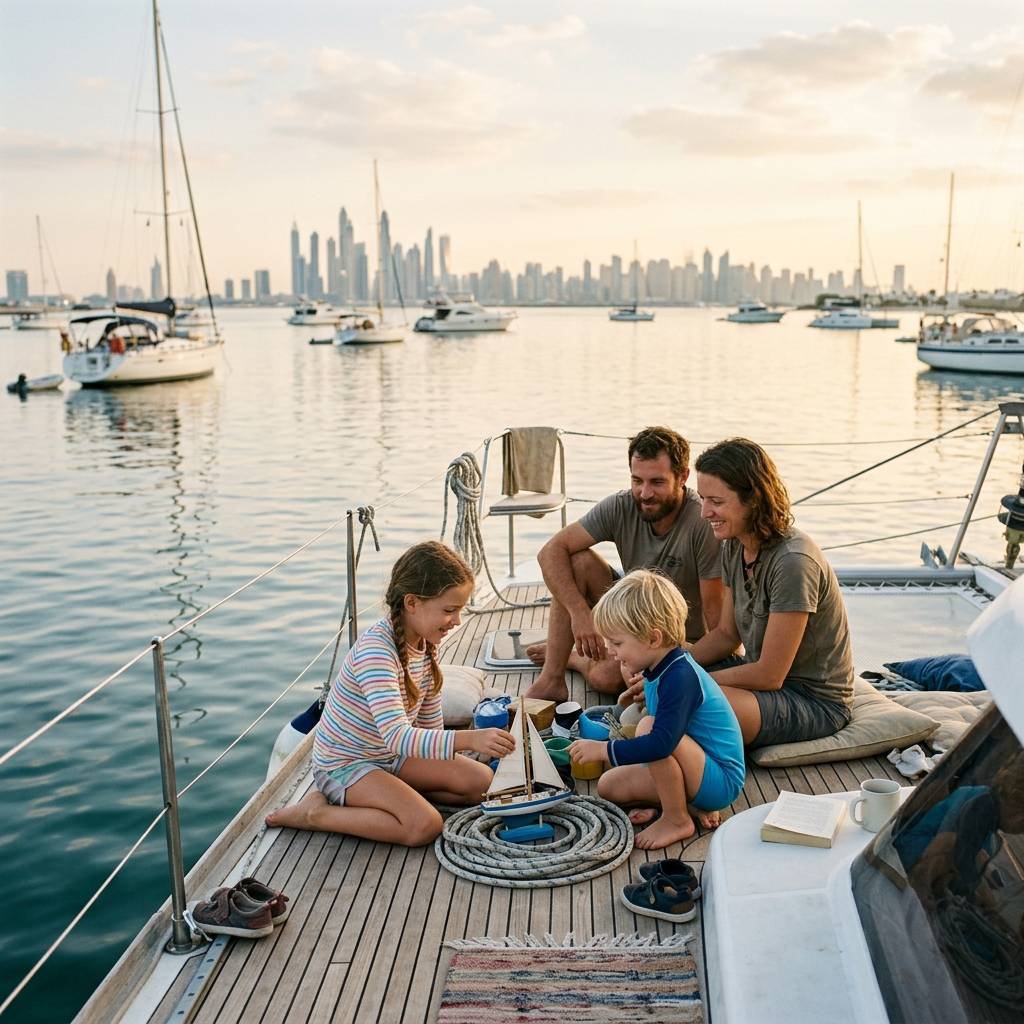
A houseboat with kids on board is a different boat from the same boat with adults only. Not in any tragic way — just genuinely different. The pace shifts, the rules tighten, the rituals multiply.
Most owners with young children come to us already knowing this. The question is how to set up the boat (and the family expectations) to make it work.
The age question
The realistic version, by age:
- Under 2. Logistics dominate. The boat is a place; you bring everything you'd bring to a hotel; nap times structure the day. Doable but rarely relaxing.
- 2 to 5. Best stage. Kids are mobile enough to enjoy the deck and the swim platform; not yet old enough to be bored. Most family stories come from this range.
- 6 to 10. Sweet spot. Confident swimmers, can help with simple tasks, love the autonomy of the boat.
- 11 to 14. Friend-driven. Kids want their friends along; without them, attention spans drop. Plan multi-family trips.
- 15+. Either fully into it (rare) or fully out (common). Don't take it personally.
Safety, in the order it matters
- Life jackets on the deck, period. Non-negotiable for under-10s. The line that works with kids: "We wear life jackets outside. Same as seatbelts in cars."
- Lifelines and netting. A boat going to be used regularly with toddlers needs proper lifeline netting around all open sides. Retrofitting netting is straightforward and we've never seen an owner regret it.
- The galley rules. Hot stoves and rocking boats don't mix. Kids out of the galley when something is cooking.
- Buddy system at anchor. No solo swimming, ever, regardless of swim ability. Adults paired with kids in the water at all times.
- The bridge is off-limits when underway. Same logic as the front passenger seat — distraction risk is too high.
The rules aren't hard to enforce because the kids understand them. Boats reward seriousness in a way kids respond to.
Sleep arrangements
The cabin question is real. Two adults plus two kids fit comfortably in a 2-cabin boat (kids in the second cabin, salon convertible spare); two adults plus three or four kids start needing a 3-cabin layout.
Twin-bed cabins beat double-bed cabins for kid sleeping. Bunks beat singles for two same-age kids. Convertible salon berths work for one extra kid; not great for two.
For very young children, portable travel cots fit fine in most cabins. We've seen owners use the same cot for three years and four boats.
The rituals kids invent
Kids onboard develop their own rhythms surprisingly fast:
- The "first jump" of the morning off the swim platform
- The pancake breakfast that kids cook with one parent
- The aft deck story before bed
- The flag they raise themselves at the start of each trip
- The fish-spotting tally chart kept across multiple trips
These traditions become the actual reason kids want to come back. Without them, the boat is just "another adult thing." With them, it's their boat too.
What surprises parents
The thing most parents don't expect: kids learn boat skills faster than adults. They watch the captain knot the lines once and they get it. They learn to read the depth gauge. They start anticipating the captain's instructions before they're given.
By trip 5 with the same family, the 8-year-old can do most of the dock approach work — fenders, lines, the wave to the harbour master. They take pride in it; they're better at it than most first-time adult guests.
What doesn't work
A few realities worth setting expectations around:
- Screens on the boat. Kids will reach for them. Owners who allow it find that screen-time defaults to home rates. Owners who restrict it (within reason) find kids invent boat games instead.
- Long crossings. Three-hour transits with under-7s are tough. Plan kid-friendly trips around shorter cruises with anchoring stops.
- Dressy entertaining. Kids and white linen are mutually exclusive. Pick one.
When boats make better family memories than houses
The thing parents tell us, six months in, is that family weekends on the boat compress more memorable moments per hour than family weekends at home. The novelty doesn't help; the constraint does. There's nowhere to escape to. The whole family is together for the duration of the trip, in a small space, without the distractions of home.
That's either the worst thing about the boat or the best, depending on how you look at it. Most parents come around to "best" by year two.
Have questions on anything in this piece? Send a note via /contact — we read every reply.
Written by
The 101Marine team
Field notes from the team that designs and builds 101Marine houseboats. We write when we have something practical to share.
More from Life Aboard
See all →
Life Aboard
Sleep on water — why owners say they sleep better aboard
The science of why hull motion settles the nervous system, what it does to sleep architecture, and the few things that ruin it for boat sleepers.

Life Aboard
Working from a houseboat — what actually works, and what doesn't
Internet, power, focus, video calls. The realistic setup for owners who want to actually log work hours from the boat — and the cases where it stops making sense.
Life Aboard
Cooking onboard in Gulf summer — what works, what to skip
The galley is hot, the AC is fighting it, the BBQ on the bridge is doing all the work. A practical guide to summer onboard cooking that doesn't ruin lunch.