
oman · musandam · cruising · multi-day
The Musandam fjords — what UAE owners need to know
An hour off the UAE's east coast, Oman's Musandam peninsula is the GCC's most dramatic cruising ground. A practical guide to crossing, anchoring, and provisioning.
Most UAE houseboat owners find Musandam in their second or third year on the water. By then they've worn out the lagoons and Palm anchorages, they've done the Saadiyat-to-Sir-Bani-Yas run, and they're looking for water that doesn't have a city skyline behind it.
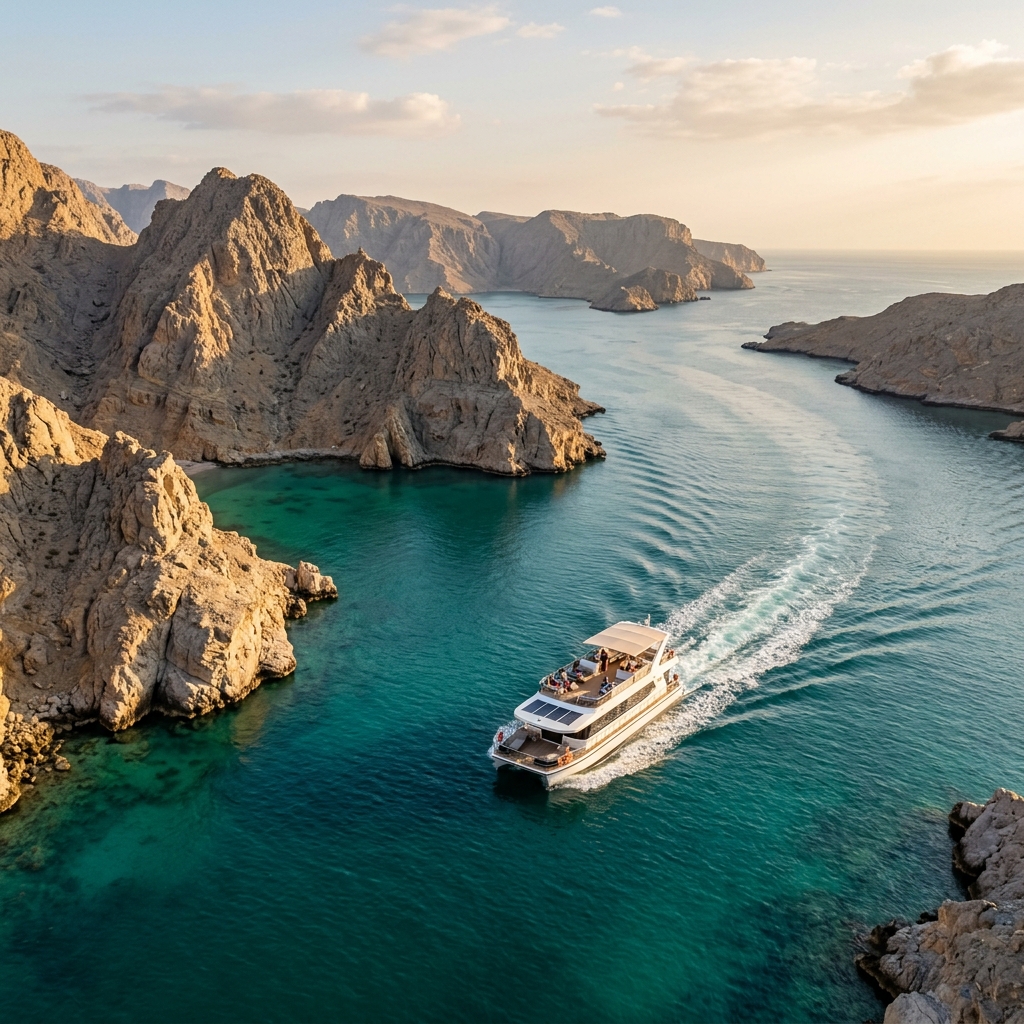
Musandam delivers exactly that: limestone cliffs rising 500 meters out of clear water, fjord-like inlets, dolphin pods, and a stillness that's hard to find elsewhere in the GCC. It's also the only place in this part of the world where you can anchor with the entire boat tucked between two cliff walls and not see another vessel for hours.
This is a working primer for UAE-based owners — not a comprehensive guide. Treat it as enough information to plan a first trip, knowing you'll learn the rest from the water.
The geography in two sentences
Musandam is a peninsula at the northern tip of Oman, separated from the rest of Oman by the UAE's Ras Al Khaimah and Fujairah emirates. It juts into the Strait of Hormuz, with the Iranian coast clearly visible on a clear day across the strait — about 35 nautical miles north.
The cruising ground runs from Khasab on the western coast around the tip past Limah and down the eastern shoreline. Most UAE owners enter via Dibba Bay on the east coast (closest to Fujairah) or via the western entry from Khasab.
The crossing
From a UAE marina, the practical approach is:
- From Dibba (Fujairah) — 8–15 nm to enter Omani waters; sheltered by the peninsula itself; least exposed crossing
- From Sharjah / Dubai — long route around the peninsula tip; 90–120 nm; rarely done directly because of the Strait crossing exposure
- From Khor Fakkan or Kalba — 25–40 nm; manageable for an experienced captain in good weather
For first-time crossings, Dibba is the obvious choice. Two hours of cruising at displacement speed and you're inside Omani waters, sheltered, and within reach of the first anchorages.
Paperwork
You'll need three things in order before crossing:
- A coastal cruising permit from the UAE side — issued by the relevant emirate's port authority. Process is straightforward, typically takes 3–5 working days, and is valid for one trip.
- Omani entry clearance — handled at the entry point. Khasab and Dibba have customs and immigration desks. Expect a 30–60 minute process on arrival; bring boat documentation, passenger passports, and the UAE permit.
- A return clearance — issued when leaving Omani waters. Don't skip this; UAE-side checks on return will look for it.
A local agent simplifies all three for around AED 1,500–2,500 per trip. Worth it for a first attempt; many owners self-handle it after the second trip.
The best anchorages for first-timers
These are the ones we send new arrivals to:
Telegraph Island — historic and accessible. Sheltered by surrounding cliffs, sandy bottom in 8–12m, room for several boats. The shore is a brief landmark hike.
Khor Najd — a deep fjord arm with a tiny village at the head. Anchor in 10–15m; the wall holds the boat steady even when the wind picks up outside.
Khor Sham — the longest fjord on the peninsula. Multiple anchorages along its 7nm length. Quietest at the inner end. Frequently visited by dolphin pods at sunrise.
Limah Bay — on the eastern coast, less visited by UAE charter traffic, more by local fishing boats. The southern lobe of the bay offers reliable holding and the best snorkeling on the peninsula.
A typical 3-day itinerary out of Dibba: enter Omani waters by 14:00 day 1, anchor at Khor Najd for the first night; cruise to Telegraph Island day 2, anchor there overnight; explore Khor Sham day 3 morning, depart for return crossing in early afternoon.
Provisioning
There are no real provisioning options inside the cruising ground. Khasab has a small souk; everywhere else is empty of services. Plan to provision fully before crossing.
For a 4-day trip with 6 people aboard, expect to need:
- 200–400 litres of fresh water beyond your tank capacity (depending on tank size)
- All food for the trip, plus 30% buffer
- All fuel for the round trip
- A second gas cylinder for the BBQ
- Extra bottled water (the heat is more direct than UAE coastal water due to the cliff radiation)
Weather windows
The cruising season runs October through April. May–September is technically possible but uncomfortable — water temperatures climb to 33 °C and the haze obscures the cliff views that are the entire point of the trip.
Within the season, watch for:
- Shamals (NW winds, 25–35 knots) — uncomfortable in open water, fine inside the fjords. Plan crossings in shamal-free windows.
- Kaus (SE winds, less common) — affect the eastern entry from Dibba; a shamal forecast is good news for you, a kaus forecast is not.
- Late afternoon thermal flow through the strait — predictable, manageable, but worth pre-planning for.
A 48-hour weather window with calm winds at both ends is the sweet spot for a 3–4 day trip.
What surprises first-time visitors
- The water clarity. 25–30m visibility is normal. The Gulf doesn't get this; the Strait of Hormuz does.
- The silence. No city light, no road traffic, no aircraft routes overhead. Genuinely quiet.
- The fishing villages. Tiny communities that have lived this coast for centuries, doing something completely unrelated to tourism.
- The wind in the fjords. Fjord walls amplify or kill local wind in unpredictable ways. A 20-knot forecast at the entrance can be 5 knots three miles inside.
- The emptiness of the eastern coast. Most UAE traffic concentrates around Telegraph and Khor Najd. The entire eastern shore from Khor Habalain south is rarely visited.
The honest case for going
Some places need exaggeration to sound impressive in copy. Musandam is not one of them. The fjord walls genuinely tower; the water is genuinely as clear as advertised; the dolphins genuinely show up most mornings.
The trip rewards owners who plan it properly and frustrates owners who treat it like an extended Palm-loop run. Musandam is a 3–5 day trip done well; it's a wasted weekend done in a hurry.
Plan for the longer version on the first attempt. The peninsula will reward the patience.
Have questions on anything in this piece? Send a note via /contact — we read every reply.
Written by
The 101Marine team
Field notes from the team that designs and builds 101Marine houseboats. We write when we have something practical to share.
More from Cruising Guides
See all →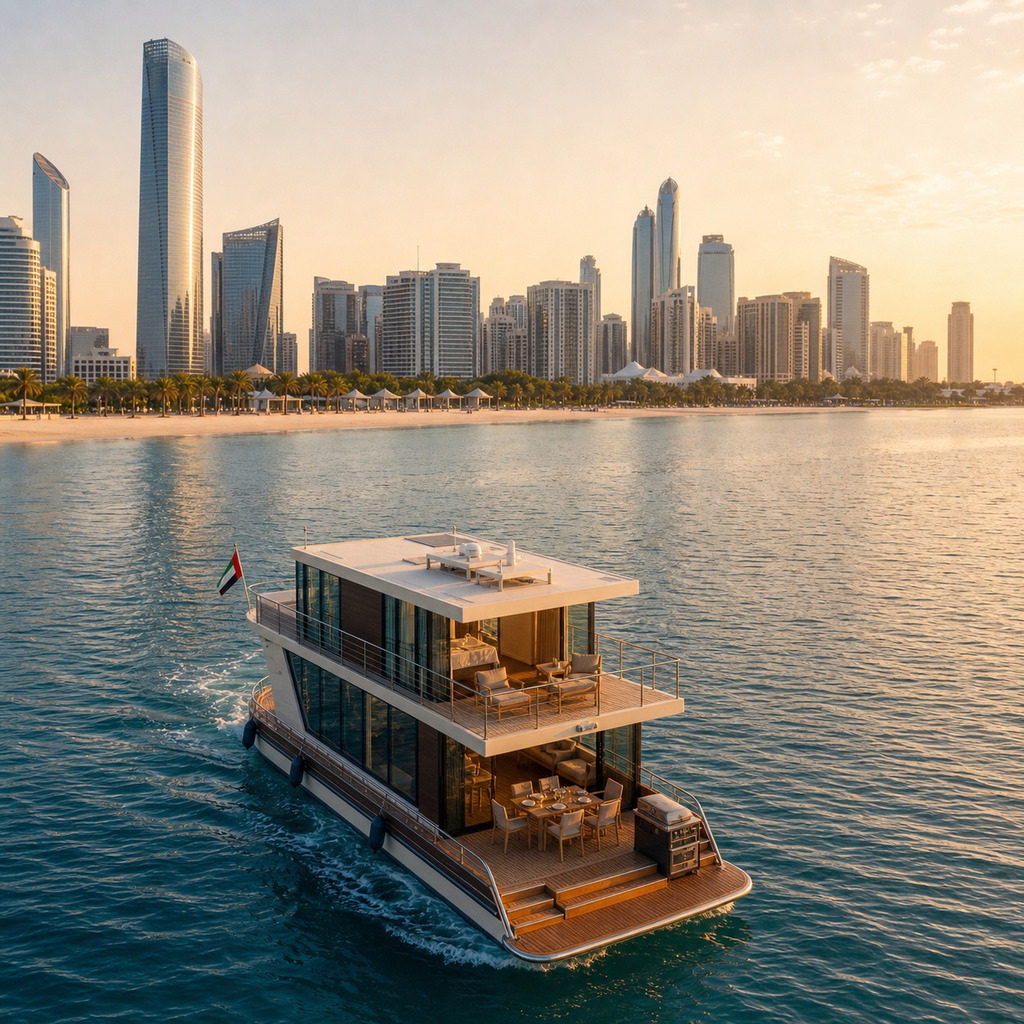
Cruising Guides
The Abu Dhabi corniche from the water — why the capital looks different by sea
From the corniche promenade, the city is buildings and traffic. From a houseboat 200m offshore, it's a coherent skyline shaped by the geography. A short cruise.
Cruising Guides
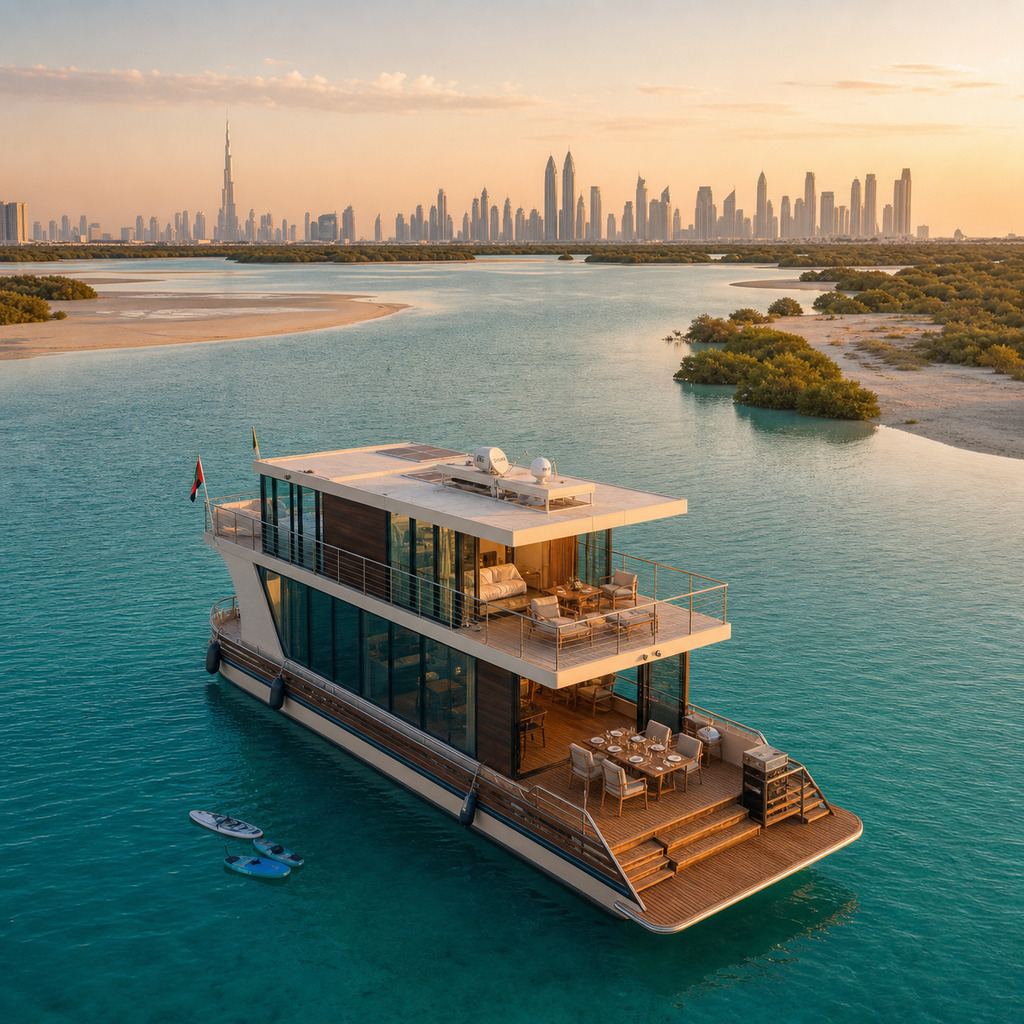
Dubai's hidden lagoons — quiet anchorages within sight of the skyline
Past the obvious Palm and Marina backdrops, Dubai's coast has pockets of sheltered water that feel removed from the city. Where they are, what to expect.
Cruising Guides
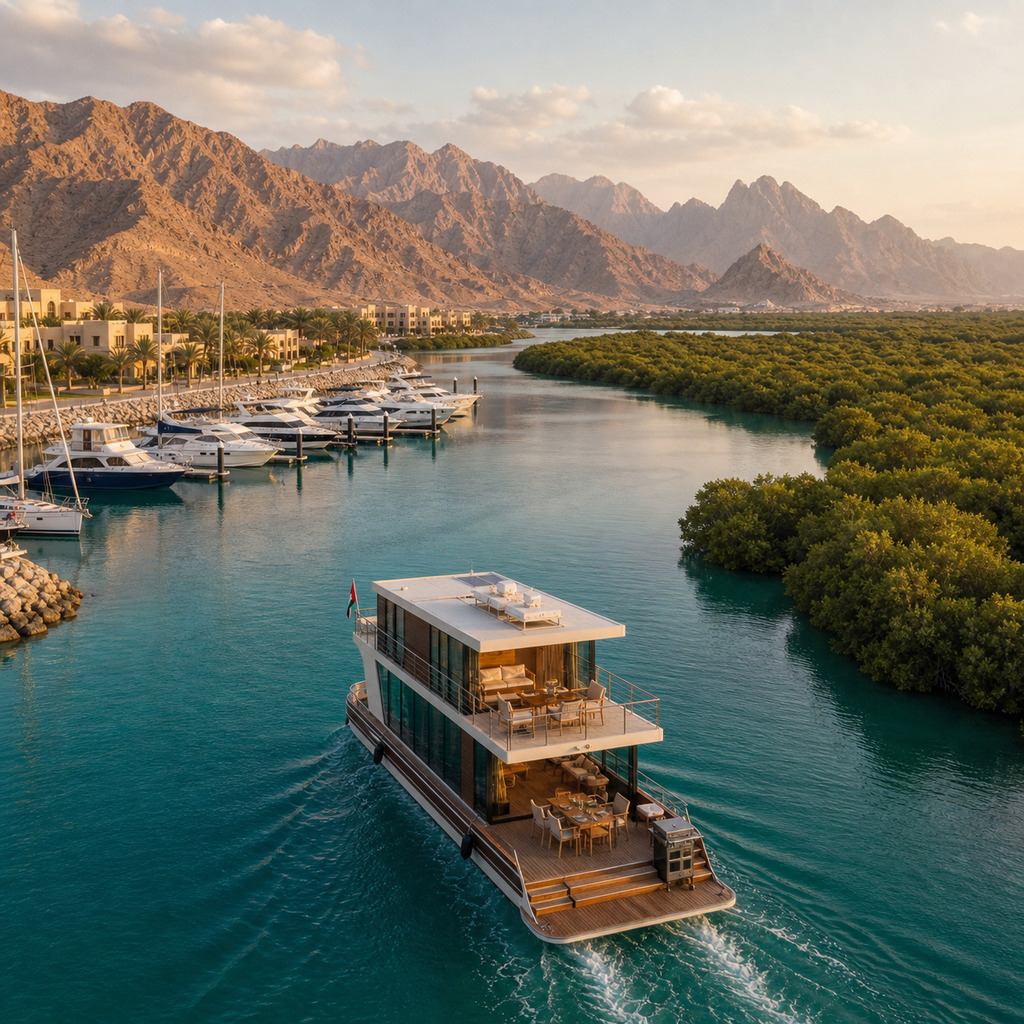
A weekend in Ras Al Khaimah — marina to mangroves to Hajar foothills
RAK rewards owners who treat it as a long weekend rather than a day trip. The route, the highlights, and why it pairs well with a tender for shore exploration.