
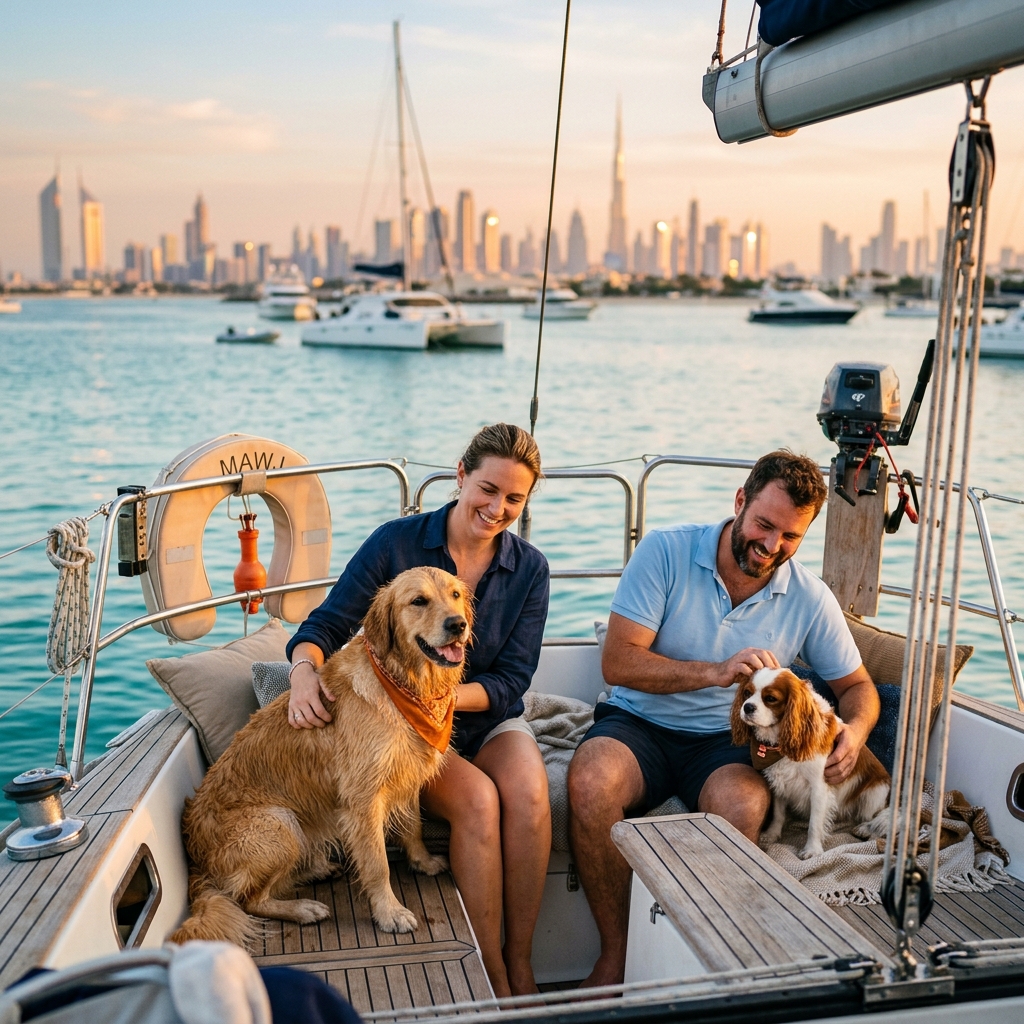
pets · ownership · family
Pets aboard — the realities, by species
Dogs adapt fastest, cats adapt strangely, birds shouldn't be there at all. The honest guide to having pets on a houseboat in the UAE.
Pets on boats range from delightful to disastrous, and which one depends almost entirely on the species and the introduction. We've seen dogs that took to houseboat life in three trips and cats that took two years.
Here's the working knowledge.
Dogs
The default-friendly pet for boats. Most dogs adapt within 2-3 trips. The signs of a dog who'll thrive:
- Comfortable on uneven surfaces (stairs, ramps, rocking floors)
- Willing to swim, even if just paddling
- Settles when the captain settles
- Doesn't bark at every passing boat after week one
Build into the boat:
- A non-skid section on the bow deck where the dog can stand
- A water bowl in a non-spill location (the corner of the salon usually works)
- A canine life jacket for the pet that lives on board
- A boarding ramp that the dog can negotiate without help
Most owners find their dog becomes the most relaxed member of the family on the boat. Something about the constant water sounds calms most breeds within an hour.
Cats
Cats adapt strangely. About 70% take to boats well; the other 30% never quite settle. There's no reliable predictor.
For cats who do adapt:
- They tend to find one favourite spot (often a windowsill or a sunny corner of the bridge) and treat that as their territory
- They self-restrict to safer parts of the boat without training
- They lose interest in escape after a few trips
For cats who don't:
- They hide constantly
- They stop eating
- They develop stress symptoms (over-grooming, vomiting)
If a cat is showing stress signs after three or four trips, take the hint. Some cats just aren't boat cats.
Litter is the practical question. Most cat-owning boats have a covered litter tray in a heads compartment, with the door propped open at anchor. Change frequency increases (humidity).
Smaller mammals
Rabbits, guinea pigs, hamsters: don't bring them. Stress is too high, environmental controls are too variable. The boat is not their place.
Birds
We've seen owners try with caged birds. None of them have stuck with it. The cumulative noise stress over a weekend is too much for most birds, and the salt air is harder on them than on mammals. Leave birds at home.
Fish
Saltwater aquariums on boats are an old yacht-owner tradition. They work technically. They make insurance more complicated and add a maintenance burden disproportionate to the joy.
If you want fish, fish off the back of the boat. They're free.
The practical guide for dogs (the most common case)
Before the first trip:
- Walk on the dock with the dog without going aboard, multiple times
- Let them get used to the boarding ramp on dry land
- Time the first trip for calm water; first trip in chop is asking too much
On the first trip:
- Stay alongside or anchor close to shore
- Frequent short walks ashore if possible
- Don't leave the dog alone on the boat
- Offer water more often than at home (heat + activity)
After the first trip:
- Most dogs that handled the first trip well handle every subsequent trip well
- A few have a regression around trip 3 (it's almost like delayed cognition catching up). Persist; it usually passes.
For the long term:
- Vet check before trip 1 to confirm fitness for water exposure
- Carry a basic pet first-aid kit
- Make sure your insurance covers veterinary emergencies onboard
What changes about the boat
Pet-owning boats develop differently:
- Slightly more carpet wear (pet claws + carpet)
- Slightly more cleaning routine (pet hair, especially in summer)
- Slightly more deck rinsing (pet-related... contributions)
- Significantly more ownership joy
The maintenance overhead is real but small. Most owners with dogs say, after a few years, that they wouldn't go back to dog-less boating. The dog adopts the boat as their second home, and they make sure you visit it.
Have questions on anything in this piece? Send a note via /contact — we read every reply.
Written by
The 101Marine team
Field notes from the team that designs and builds 101Marine houseboats. We write when we have something practical to share.
More from Life Aboard
See all →
Life Aboard
Sleep on water — why owners say they sleep better aboard
The science of why hull motion settles the nervous system, what it does to sleep architecture, and the few things that ruin it for boat sleepers.

Life Aboard
Working from a houseboat — what actually works, and what doesn't
Internet, power, focus, video calls. The realistic setup for owners who want to actually log work hours from the boat — and the cases where it stops making sense.
Life Aboard
Cooking onboard in Gulf summer — what works, what to skip
The galley is hot, the AC is fighting it, the BBQ on the bridge is doing all the work. A practical guide to summer onboard cooking that doesn't ruin lunch.