
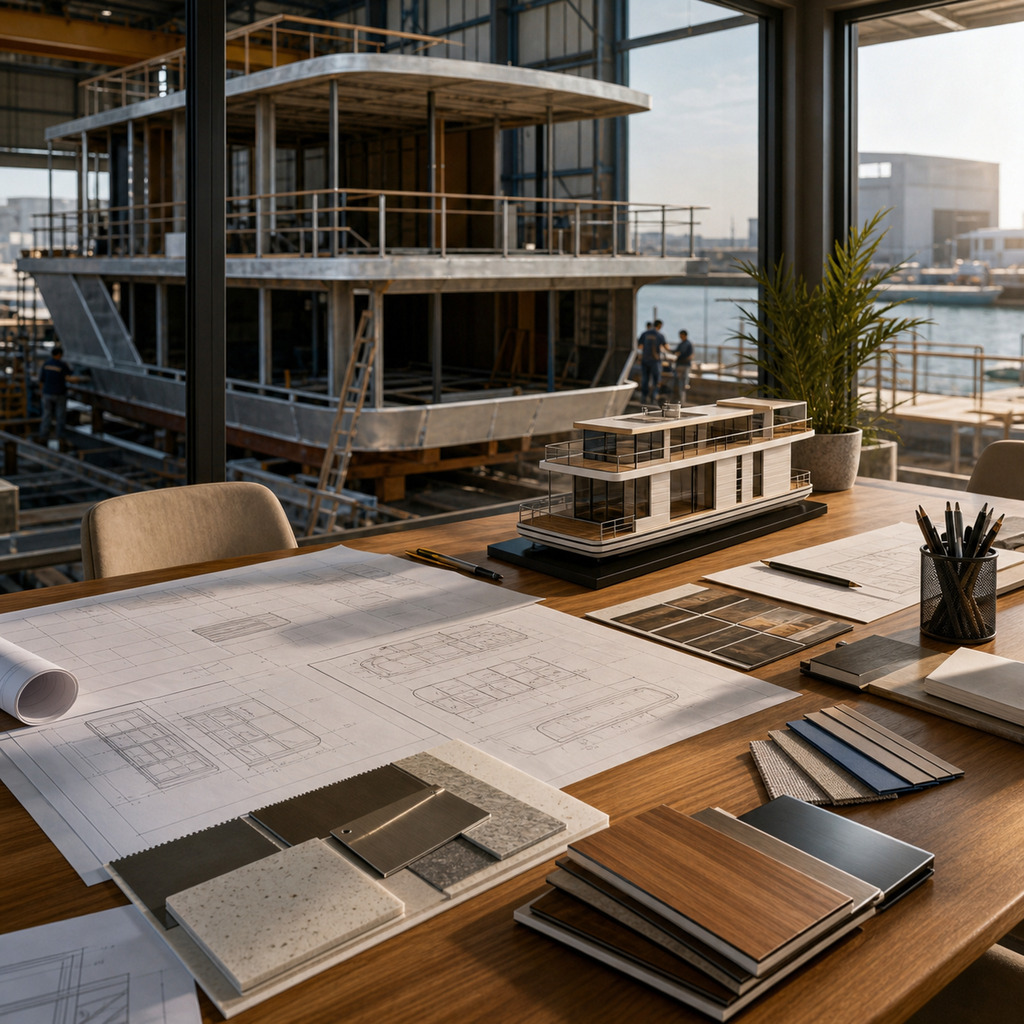
custom-build · buying · build-process
The mistakes new custom-build owners make (before construction even starts)
Most regrets in a custom houseboat trace back to decisions made before steel was cut. Five common patterns we've watched dozens of new owners walk into.
Custom houseboats are the right answer for the right buyer. They're also the wrong answer for buyers who confuse "custom" with "decorating." The distinction shows up in regret patterns that are remarkably consistent.
These are the five we see most often, and what we've learned to do about them.
1. Not knowing how you actually want to use the boat
The most common single mistake. A buyer arrives with strong opinions on aesthetic details and weak opinions on use case. Three suite layouts? Open plan? Sky deck size? They have answers; the answers are based on photos rather than experience.
Six months in, the boat is beautiful and slightly wrong. The third suite is rarely used. The sky deck Jacuzzi sees three uses a year. The closed-off pantry feels claustrophobic.
The fix: charter a similar boat — or at minimum spend a weekend on a friend's — before specifying anything. Use, don't imagine. The hour you spend on a real boat is worth ten hours of design meetings.
We require new build clients to spend at least one full day on a comparable boat before signing the design phase. The change in their priorities by the second meeting is dramatic.
2. Over-specifying the entertaining footprint
A close second. New owners imagine the boat full of guests. They specify large salons, multiple dining zones, oversized bridge decks, eight-person Jacuzzis. The boat is built for the parties they hope to throw.
The reality, for most owners: the average use is 4-6 people. The big parties happen 2-3 times a year. The rest of the time, the entertaining footprint is empty space that the AC has to cool.
The fix: specify for your average use, not your peak use. Add convertibility (sofa beds, foldaway tables, modular seating) to handle the peak occasions. The peak parties don't need to be "perfectly accommodated" — they need to "work."
3. Specifying systems based on price rather than maintenance
The decision that hurts most over time. Buyers compare options by upfront cost — the cheaper AC unit, the lower-priced battery brand, the budget electronics package. Six months in, the cheaper components are already showing wear; by year three, replacement is needed.
The cost of "saving 20% on the build" is often "spending 80% more on year-3-to-5 refits."
The fix: for any system that runs constantly (AC, batteries, electronics, hot water, refrigeration), specify the better option even if it costs 30-40% more. Run cost over 7 years, not just purchase cost. We do this calculation for clients on request and the answer is almost always "spec the better unit."
4. Underestimating the timeline cost of decision indecision
Custom builds run on a rolling schedule. Each phase has decision deadlines; each missed deadline pushes the schedule.
Owners who decide quickly stay on schedule. Owners who linger on small decisions add weeks. Two months of indecision over interior finishes can push delivery from December to March, which means missing a winter cruising season.
The fix: decide quickly on small things; spend time on big things. Counter-tops are not as important as cabin layout. Don't agonise over fabric swatches when the bigger decisions are still open.
We've started using a "decision velocity" framework with new clients — track the weekly decision count vs the schedule's required count. Clients who get behind early stay behind.
5. Adding instead of subtracting
The most subtle. New owners say yes to options because options are exciting. Each "yes" adds cost and weight; the boat grows heavier and more complex. By the end of the design phase, the boat has 40 features the client wanted at the time and will use 15 of.
The best custom builds are often the ones where the client says "no" to most of the available options. A simpler boat is often a better boat.
The fix: force yourself to subtract for every addition. "If I add the second hot tub, what comes out?" Run this check on every decision. The boats with the highest owner satisfaction at year 3 tend to be the simpler ones.
A common thread
The five mistakes share a pattern: they happen when the buyer is making decisions in the abstract instead of from experience. The fix is the same in each case — find a way to test before committing.
That's why we structure our build process around early prototypes (digital walk-throughs, mockups for spaces clients are uncertain about) and around mandatory exposure to similar boats. Buyers who go through this process arrive at much better-fitting final designs.
What "custom" actually means
A custom build isn't a build where you choose every detail. It's a build where you choose the right details — the ones that matter for how you'll use the boat. The other details are best handled by experienced shipwrights and designers who've seen what works.
The customers who give themselves permission to defer the small decisions to the team are usually the most satisfied with their boats at year three.
A final note for prospective custom buyers
If you're early in the consideration process, the single most useful thing you can do is spend time on actual boats. Not at boat shows; on the water. Charter, ride along, beg invitations from owners. Notice what you notice. Notice what bores you. Notice what you wish were different.
By the time you walk into the design meeting, your priorities will be specific and well-grounded. That's the half of the build that determines whether you get the boat you wanted.
The rest is logistics.
Have questions on anything in this piece? Send a note via /contact — we read every reply.
Written by
The 101Marine team
Field notes from the team that designs and builds 101Marine houseboats. We write when we have something practical to share.
More from Buying & Owning
See all →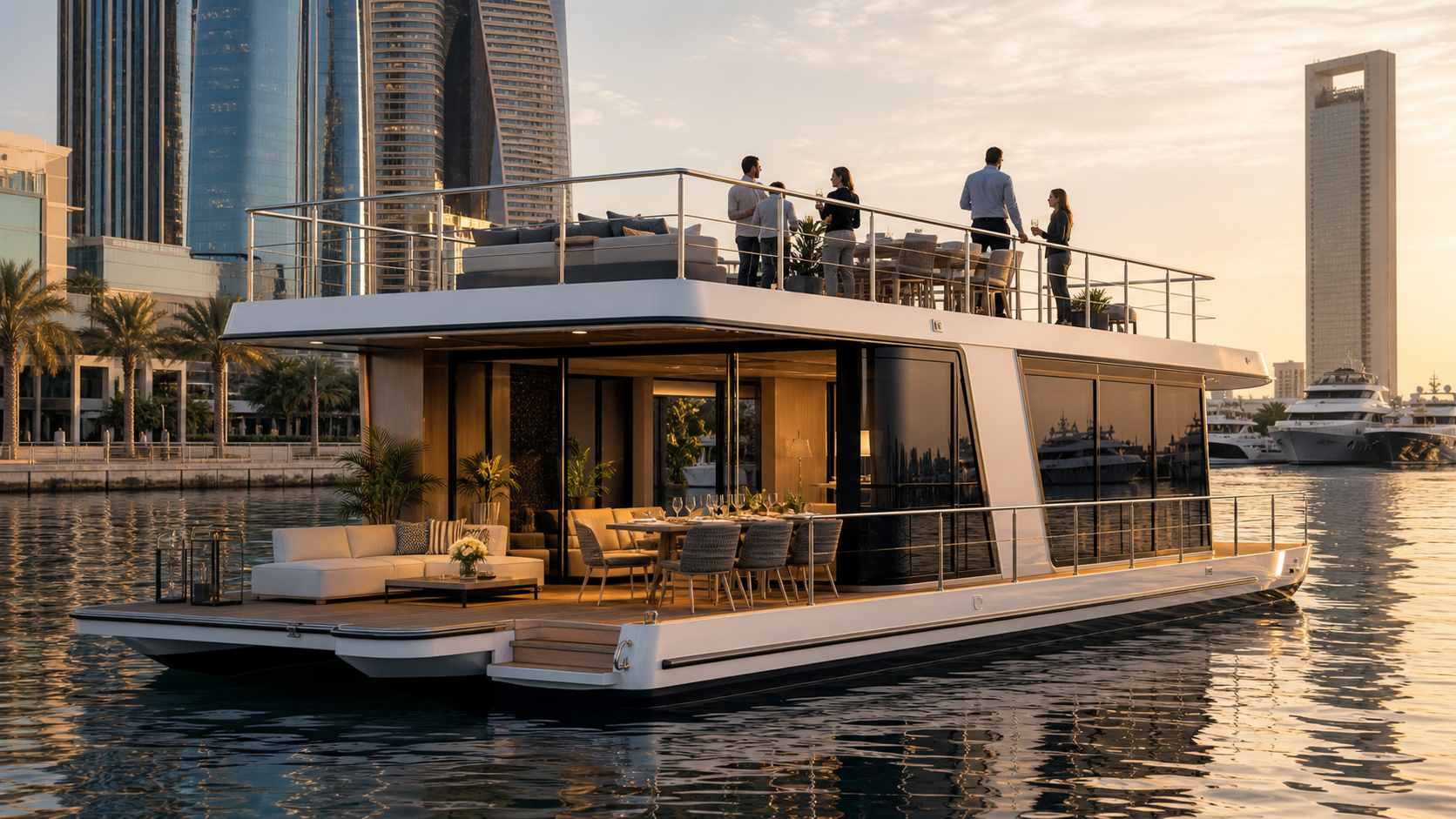
Buying & Owning
From Yacht Culture to Houseboat Ventures: Why UAE Entrepreneurs Are Investing in Waterfront Business Assets
A practical look at how houseboats, floating lounges, and waterfront platforms can support hospitality, tourism, and private business experiences in the UAE.
Buying & Owning
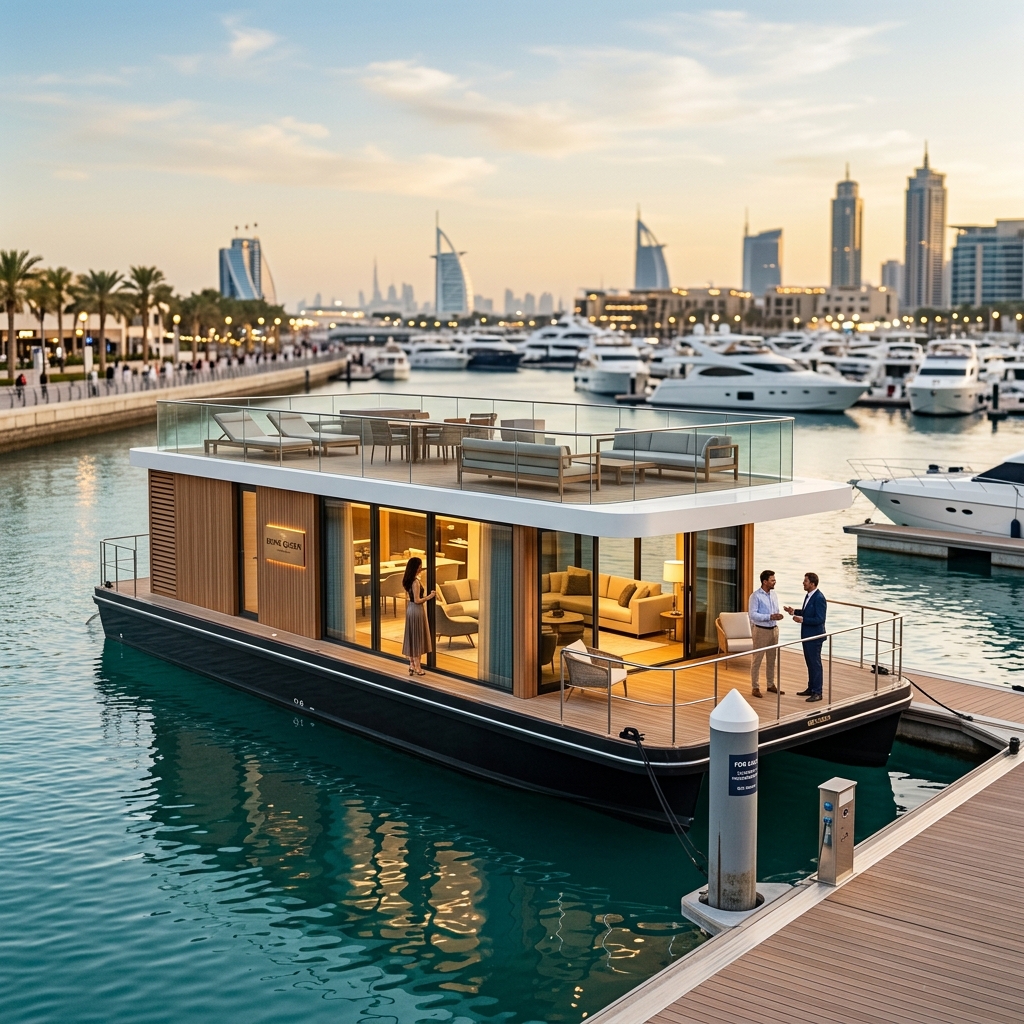
Houseboat resale in the GCC — what holds value, what doesn't
The secondary market for UAE houseboats is small but consistent. Boats that hold value share specific characteristics; boats that don't share predictable failures. A study.
Buying & Owning
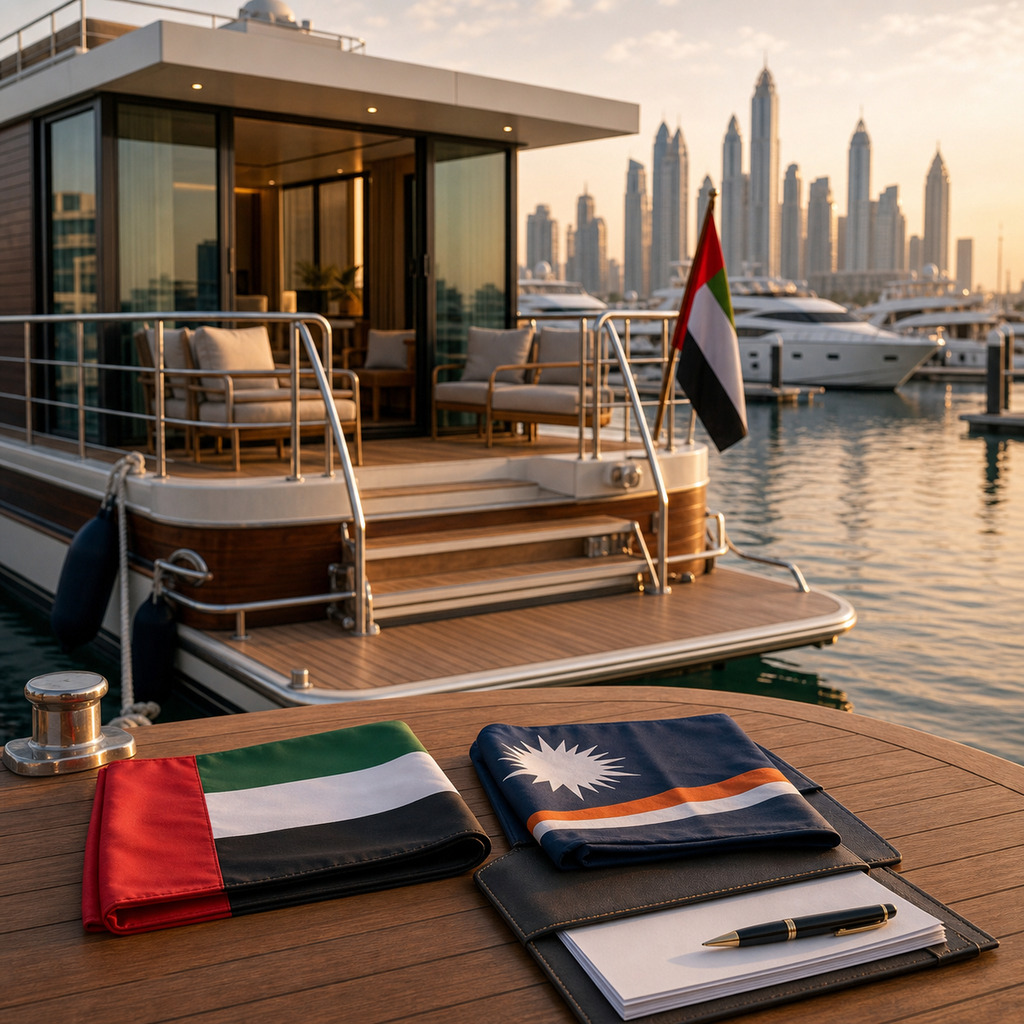
Flagging a houseboat — UAE vs offshore registration
Personal preference, tax considerations, charter use, and resale. The factors that determine whether to flag your boat in the UAE or pick an offshore register.