
lifestyle-pivot · stories · downsizing
Why I sold my villa for a houseboat — an archetypal lifestyle pivot
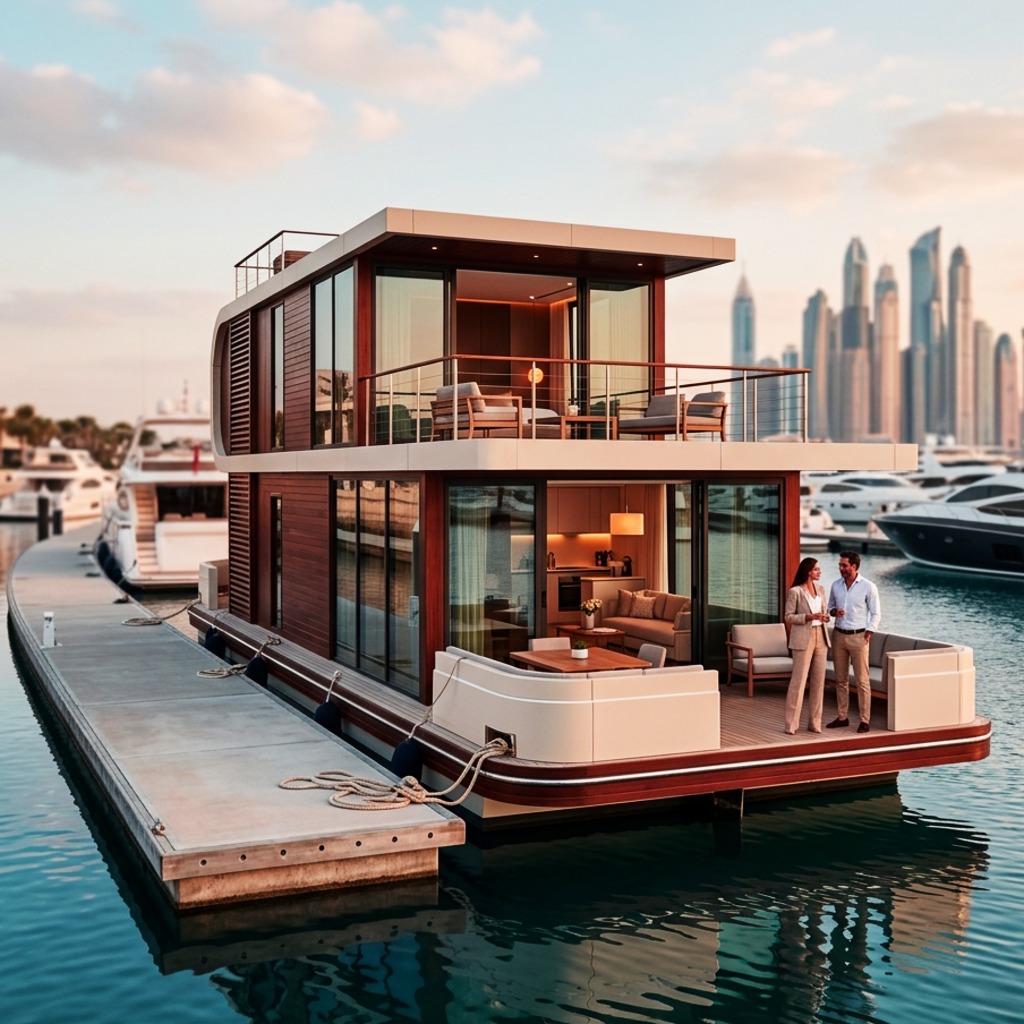
An anonymised composite of the owners we've worked with who made the unusual decision to swap a Saadiyat villa for a 17-meter houseboat. The numbers, the doubts, the year-three verdict.
This is an archetypal story — drawn from the patterns we've watched several owners live through. The specifics are anonymised; the experience is real.
The setup
He was forty-eight, divorced, with grown children. He'd bought the Saadiyat villa twelve years earlier, when it was an aspiration. By the time he sold it, it had become a logistics problem — eight rooms, two staff, a garden requiring constant attention, and most of it unused most of the time.
"I was paying to maintain rooms I'd been in twice in the last year."
The houseboat idea came from a friend who'd done it. He'd watched the friend live a smaller life — a 15-meter boat at Yas Marina — and seen something appealing about the constraint.
The decision was three years in the making. The transaction took six months.
The numbers
Selling the villa: AED 14M after fees and brokerage. Buying the boat: AED 3.4M for a custom 17-meter houseboat. Renting an apartment as a land base: AED 240k/year for a one-bedroom in Saadiyat. Annual boat running cost: AED 320k.
Net effect: he liberated AED 9.5M of capital and his annual costs dropped by roughly 60%. The investment of the freed capital — handled by his wealth manager in conservative income-generating assets — covered his housing costs and then some.
The financial argument was the straightforward part.
The doubts
The harder part was the social transition. Friends asked questions. His children, both now adults, were skeptical. A few business contacts assumed something was wrong.
"People associate houseboats with retirement or eccentricity. Neither is true. But the perception is there."
He spent the first six months explaining the decision to people who hadn't asked.
The first year
The boat was perfect on paper and required adjustment in reality.
The good:
- Mornings on the deck with the city across the water
- Quiet that the villa never had
- Fewer obligations, less staff, simpler logistics
- The boat became a social signal of a different kind — friends wanted to visit, but on his terms
The hard:
- Storage. He'd kept too much from the villa.
- Wardrobe. Marine living required different clothes; he gave away half his suits.
- Hosting. The villa had hosted dinners for sixteen; the boat handled eight comfortably.
- Identity. The villa had been his presentation of himself; the boat reframed it entirely.
By month nine, the adjustments had mostly worked themselves out.
The second year
Once the operational kinks were resolved, the lifestyle benefits compounded.
He spent significantly more time outdoors. He cooked more. He read more. He travelled more — the boat being a self-contained unit made spontaneous trips possible.
His health improved. He attributed it to mornings on deck, more walking (smaller spaces meant more movement), and less hosting (less alcohol, lighter food).
His relationships shifted. Some friends stopped visiting; others started visiting more. The new pattern was different but not worse.
The third year — the verdict
By year three, he'd stopped framing the decision as "I sold the villa." It became "this is how I live."
The boat had become routine. The constraints had become preferences. The social explanations stopped being needed because nobody asked anymore.
When friends asked, in private moments, whether he regretted the decision: he didn't, and he didn't even need to think about it.
When asked whether he'd recommend it to others: that was harder. He thought it depended entirely on the person. Some people the lifestyle suits; some it doesn't. He'd known himself well enough to make the right call; not everyone has that self-knowledge.
What he'd tell himself at year zero
The advice he gave a year-three friend considering the same move:
- Don't expect everyone to understand. Some won't. Make peace with that before you commit.
- Plan the storage problem. You have less storage than you think you'll need; you need less storage than you think you do; reconciling these takes time.
- Keep enough capital free for flexibility. Don't lock everything in income-producing assets that can't be touched.
- Get the right boat. Specifying it carelessly is worse than not making the move at all.
- Give it three years before judging. Year one is adjustment; year two is settling; year three is the actual experience.
What this story illustrates
Not every prospective owner is a candidate for this kind of pivot. The owners we've worked with who made it successfully share traits:
- Adult or independent children
- A clear sense of what they actually wanted (not what they thought they should want)
- Financial situations that made the freed capital meaningful
- Personalities that handled social friction comfortably
- Comfort with smaller physical spaces
- Genuine attachment to the water rather than to status
For owners who fit this profile, the pivot can be transformative. For owners who don't, it leads to selling the boat within two years and buying a villa again. We've seen both outcomes.
The honest answer about whether to make this kind of pivot: spend at least two years thinking about it before committing. Real two years. Not enthusiasm, not impulse — sustained interest. If it survives that test, the pivot is probably real.
A coda
The same friend who originally inspired him sold his houseboat at year four — moved abroad, life changed, the boat didn't fit. Different outcome from the same starting point. Both were the right decisions for the people making them.
Lifestyle pivots aren't one-size-fits-all even when the surface circumstances look similar. The right answer for any individual depends on factors that don't show up in the surface comparison.
If you're considering it: the boat is the easiest part. The harder part is knowing yourself well enough to know whether the lifestyle fits.
Have questions on anything in this piece? Send a note via /contact — we read every reply.
Written by
The 101Marine team
Field notes from the team that designs and builds 101Marine houseboats. We write when we have something practical to share.
More from Stories
See all →
Stories
Jeff Bezos, Blue Origin & the Rise of Luxury Life on Water: What Yacht Living Teaches Modern Entrepreneurs
What Jeff Bezos' yacht lifestyle reveals about modern success, privacy, mobility, and why entrepreneurs are increasingly drawn to life on water.

Stories
The captain career change — from corporate to operating a charter business
An archetypal study of one of the more dramatic professional pivots we see — corporate executives who buy a houseboat and end up operating it commercially as a second career.

Stories
A three-generation family on a houseboat — the tradition that compounds
An archetypal study of what changes — and what doesn't — when a family keeps the same houseboat across decades. The ritual, the wear, the children who grew up aboard.