
maintenance · ownership · UAE
Why Gulf summers ask more of your boat (and how to plan for it)
Heat, humidity, salt, and dust — the combination that defines maintenance in the UAE. A practical primer on what to inspect, when, and why.
Boats live different lives in different climates. A houseboat in the Mediterranean spends most of the year in benign conditions; a houseboat in the Gulf spends three months a year being slowly cooked and salted at the same time.
Most maintenance failures we see on UAE-flagged boats trace back to one of four environmental stressors. Knowing what they do — and when — turns into a calendar that keeps your boat in working order without surprise repair bills.
The four stressors
Heat. Engine bays in the Gulf summer routinely cross 60 °C with hatches closed. Rubber hoses, plastic fittings, and electrical insulation all age faster at those temperatures. Your two-year hose becomes a six-month hose if you don't ventilate.
Humidity. The UAE is dry inland but coastal humidity climbs steeply from June through September. Sealed compartments grow mould; electronics develop moisture damage; varnished interior wood swells then contracts as the dehumidifier cycles.
Salt. Always present, but particularly aggressive when paired with heat. Crevice corrosion finds its way under stainless steel fittings, behind anchor windlasses, around seacock fasteners. By the end of a summer, untreated stainless can show staining that needs polishing rather than just rinsing.
Dust. Easy to underestimate. Every shamal pushes a fine layer of inland sand across coastal marinas. It works its way into vents, clogs filters, and abrades any moving surface that's been left lubricated with the wrong product.
A working calendar
This is what we recommend new owners build into their schedule. Adjust to your usage profile.
Weekly (during hot months)
- Rinse the deck, rails, and stainless with fresh water — focus on the low-lying spots where salt pools.
- Check the bilge for any standing water. Heat accelerates anything that's already going wrong.
- Run the AC and dehumidifier even when the boat is empty. A boat sitting closed up at 40 °C with no ventilation is a chemistry experiment.
Monthly
- Walk the engine bay with a torch. Look at hose ends, fuel-filter housings, and any rubber that's adjacent to the exhaust manifold.
- Test the bilge pumps. A failed bilge pump in the summer can sink a boat in days through condensation alone.
- Pump out holding tanks before they're full. Heat plus full holding equals smell, every time.
- Inspect zincs (sacrificial anodes). They wear faster in warm water.
Seasonally (twice a year minimum)
- Antifouling check. Even a good antifoul shows wear after a Gulf summer.
- Service the air conditioning. Filters, refrigerant level, condensate drain.
- Replace the propane sniffer batteries.
- Look at the rigging if you have it — UV degrades synthetic lines faster than the spec sheet suggests in 50 °C heat.
Annually
- Hull haul-out, full bottom job. Less common in the UAE than the Mediterranean because we don't have a winter lay-up tradition, but the heat-and-salt combination compresses a "two-year" maintenance cycle into one.
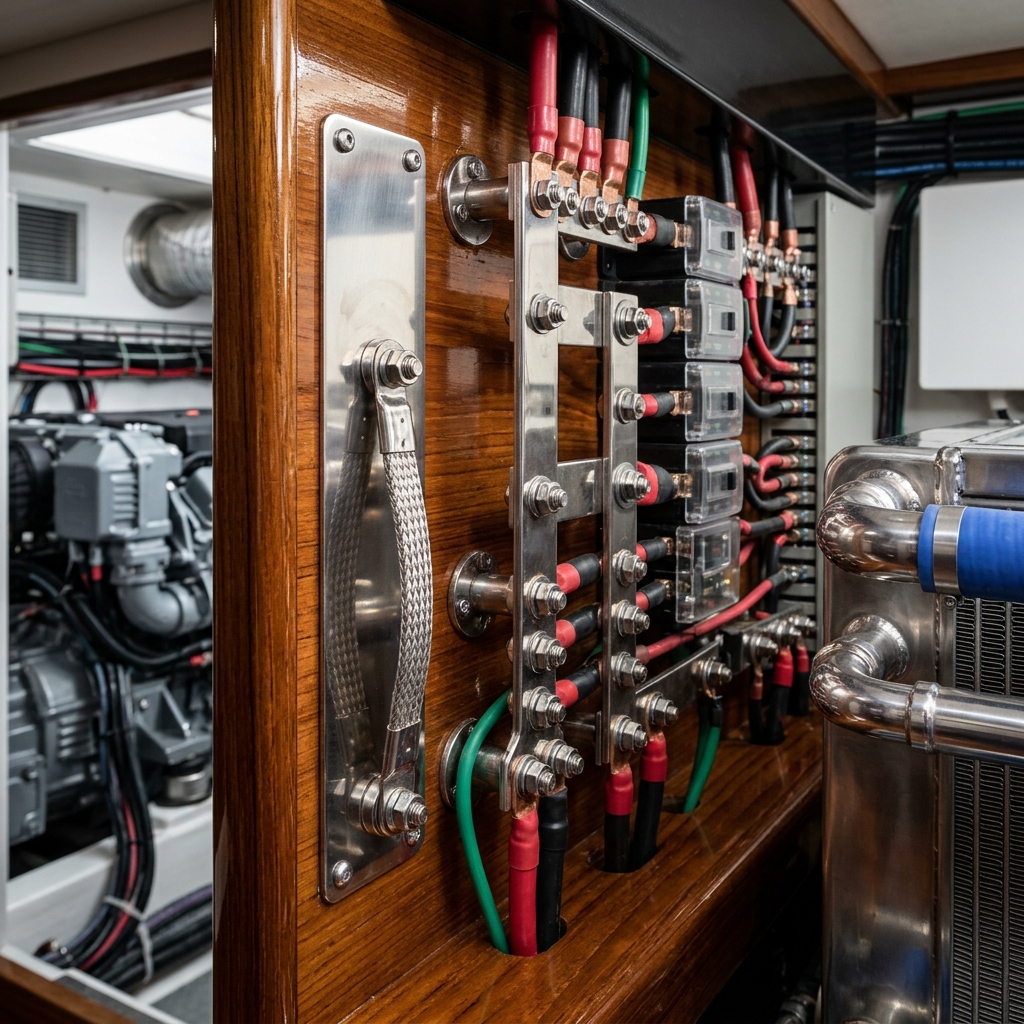
- Full electrical survey. Connections back off in the heat-cool cycle; thermal imaging picks up corroded terminals before they become a fire risk.
What kills boats here, in order
After a decade of building and servicing boats on this coast, we'd rank the top three reasons UAE houseboats end up needing major work earlier than expected:
- Skipped weekly rinses. Salt left to dry repeatedly is harder to undo than salt rinsed off after every trip.
- Closed-up summer storage. The single biggest source of interior damage. Run the AC even when no one is on board. Berth fees and the electricity are cheaper than the refurbishment.
- Wrong lubricants. Lithium grease and many marine oils thin out at 50 °C and stop protecting. Use products rated for tropical marine service.
The good news
The Gulf is actually one of the kinder climates on a boat in some ways: no freezing, no snow loading, no biological growth that compares to the Caribbean. Owners who plan for the heat-salt-dust trio find their boats hold up well, sometimes better than their spec sheet might suggest.
The boats that struggle aren't the ones that get used hard — they're the ones that sit. A used boat is a maintained boat, almost by accident. A boat owner's most reliable preventive maintenance is, ironically, just going out on it.
Have questions on anything in this piece? Send a note via /contact — we read every reply.
Written by
The 101Marine team
Field notes from the team that designs and builds 101Marine houseboats. We write when we have something practical to share.
More from Maintenance & Tech
See all →
Maintenance & Tech
Wood, gel coat, leather, fabric — what survives the Gulf, what doesn't
Material specification on a UAE-bound houseboat is a different problem than in temperate climates. Heat, UV, salt, and humidity reward some choices and punish others quickly.
Maintenance & Tech
The case for hybrid drives in houseboats — silent overnight, predictable economy
Hybrid diesel-electric installations on houseboats deliver silent overnight operation and meaningful fuel savings. The realistic version: where they win, where they don't.
Maintenance & Tech
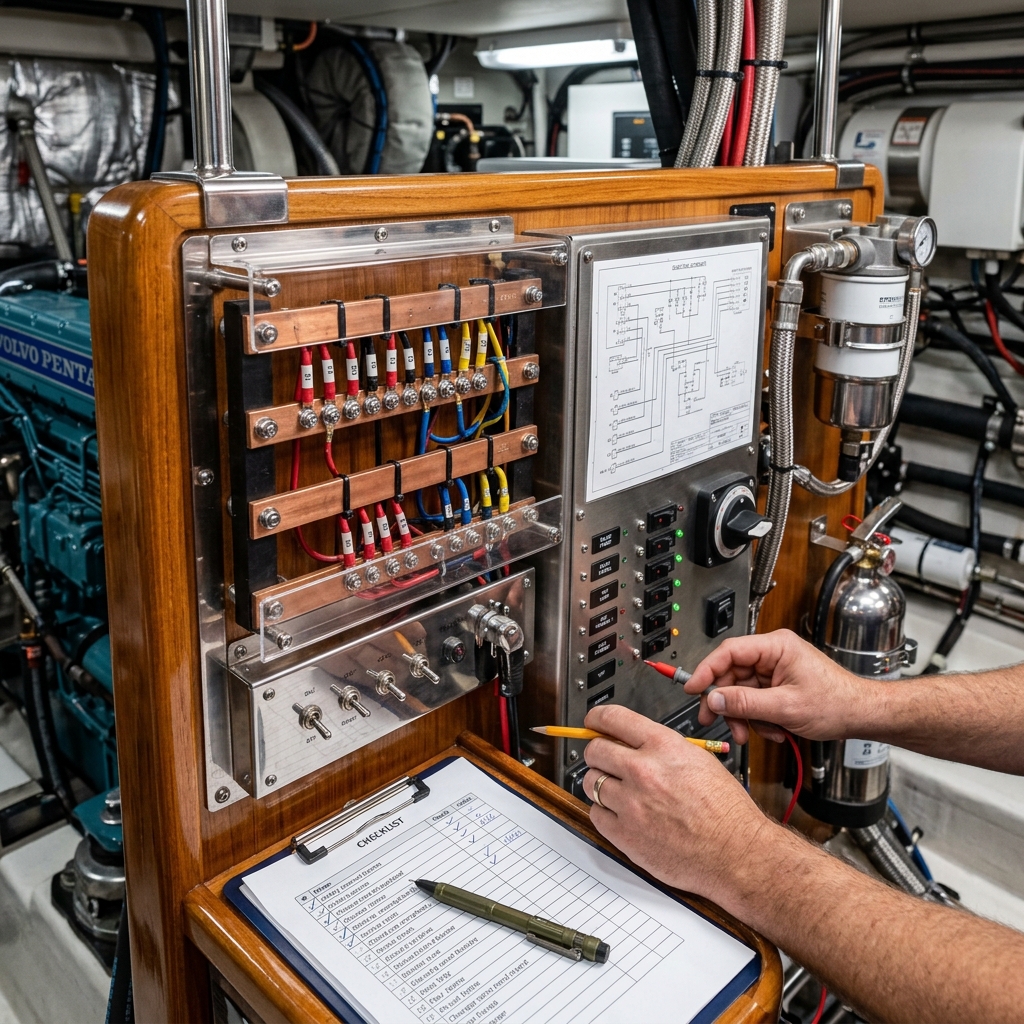
The 30-minute pre-departure check that prevents 90% of trouble
A printable working checklist — engine room, deck, electrical, safety, weather. The owner habits that catch problems before they leave the dock.