
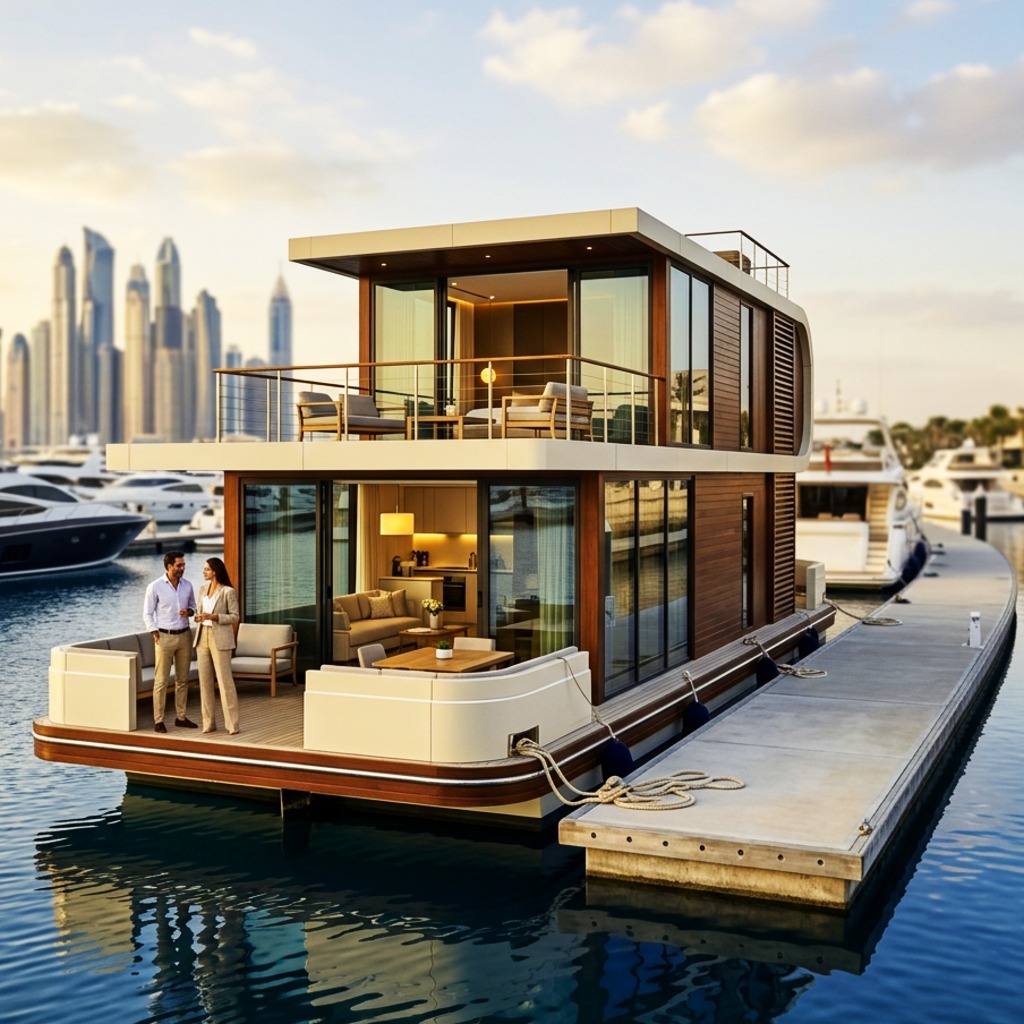
materials · interior · specification
Wood, gel coat, leather, fabric — what survives the Gulf, what doesn't
Material specification on a UAE-bound houseboat is a different problem than in temperate climates. Heat, UV, salt, and humidity reward some choices and punish others quickly.
Material choice on a UAE-bound houseboat is a more consequential decision than first-time owners often realise. The same teak that ages beautifully on a boat in Naples weathers grey within 3 years on a boat in Abu Dhabi. The leather that lasts a decade in Monaco hardens in 4 years here.
The good news: there are right answers, and they're well-known. The trick is specifying them up front rather than learning expensively.
The four stressors
UAE climate is a specific combination:
- UV exposure: roughly 30-40% higher than European Mediterranean averages
- Heat: sustained 40°C+ outdoor; 60°C+ on dark surfaces in direct sun
- Salt: constant marine deposition; concentrated when humidity rises
- Humidity cycles: dry inland → high coastal → indoor controlled
Each stressor punishes different materials. Materials that handle one fail under another.
Wood — the headline question
Most owners want wood somewhere on the boat. The question is which wood, and where.
Teak. Traditional choice for marine wood. Holds up well to salt and UV but ages grey within 18-36 months in UAE conditions. Restoration via sanding and oiling is straightforward but ongoing — annual at minimum, twice-yearly for the most-exposed surfaces.
Synthetic teak (Flexiteek and equivalents). Increasingly common. Looks similar to teak; doesn't age grey; doesn't require maintenance. Slightly different texture under bare feet. Survives the UAE summer better than real teak. We specify this for most new builds where teak look is wanted.
Iroko. African hardwood; harder than teak; somewhat more UV-stable. Less traditional but performs well.
Acacia and meranti. Cheaper alternatives. Don't recommend for exterior use in UAE — surface checking within 18 months is common.
For interior: Oak, walnut, cherry — all fine if humidity-controlled. Avoid soft woods (pine, untreated mahogany) which dimensional-change too much through summer/winter cycle.
Gel coat and exterior finishes
The boat's exterior gel coat or paint takes the most punishment. Material specification matters:
Modern marine gel coat (poly-vinyl-ester or vinyl-ester). Standard for new builds. Holds gloss for 3-5 years before needing polish; full re-coat at 8-12 years.
Polyurethane paint (Awlgrip, Imron equivalents). Used on premium yachts. More expensive; longer-lasting. Worth the upgrade for owners with long ownership horizons.
White vs colour: White holds up best to UV. Darker colours fade faster and absorb more heat (the deck temperature differential between white and dark navy can be 10-15°C in midday sun).
For new builds in the UAE, white or near-white exteriors are the right specification. Owners who want darker accents should restrict them to small accent areas.
Leather and upholstery
Marine leather is a particular category. Domestic upholstery leather fails in marine conditions within months.
Marine-grade leather (proper):
- UV-resistant
- Mildew-resistant
- Sealed grain
- Tested for salt-air exposure
- Typically 2-3x cost of domestic leather
In UAE conditions, marine-grade leather lasts 8-12 years before showing meaningful wear. Domestic leather fails in 2-4 years.
For high-traffic seats and surfaces, the specification difference is critical. Specify it correctly at build; replacement costs more than original specification.
Fabric
Marine fabrics matter as much as leather. Outdoor cushions, throw pillows, awnings, headliners — all need specific specification:
Sunbrella and equivalent solution-dyed acrylics. Industry standard for outdoor marine fabric. UV-stable; mildew-resistant; salt-tolerant. 6-10 year service life in UAE conditions.
Cotton and natural fibres. Don't use for any exterior application. Mould grows; UV destroys; salt accelerates failure.
Microfiber synthetic blends (interior). Acceptable for interior upholstery in air-conditioned spaces. Avoid for any exterior or partially-exterior use.
For headliners specifically, vinyl with marine-rated backing handles UAE conditions; cloth headliners deteriorate within 5 years.
Hardware — stainless steel grades
Not all "stainless" is the same. The grades commonly used on boats:
304 stainless. Most common general-use grade. Stains and corrodes in heavy marine exposure. Adequate for protected interior fittings.
316 stainless. Marine grade. The right specification for any exposed hardware. Required for cleats, rails, hinges, fasteners in any salt-exposed location.
316L (low-carbon). Even better corrosion resistance. Specified for high-end builds.
The cost premium between 304 and 316 is small at the specification stage. The performance difference is large over time. Always specify 316 minimum for marine hardware.
Plastics and acrylics
Sun-exposed plastics on boats degrade. Specifications worth getting right:
Acrylic windows and hatches. UV-stable acrylics rated for marine use. Cheap acrylics yellow within 3-5 years.
Plastic deck fittings. UV-stable nylon or acetal. Cheap polypropylene fails.
Storage covers. UV-rated covers, not generic. The cost difference is small; the lifespan difference is 3-4x.
Carpets and rugs
Most UAE houseboat owners eventually remove or replace original carpets. The reason: humidity cycles cause carpets to absorb moisture, dust to bond with the moisture, and eventual mould or staining.
Better alternatives:
- Loose woven natural-fibre rugs (sisal, jute) for dry interior
- Marine-rated synthetic carpets if carpet is specified
- Vinyl plank flooring for high-traffic areas
- Natural stone or composite tile in galley/heads
Most experienced owners specify minimal carpet at build, adding loose rugs as needed. Easier to replace; better humidity tolerance.
Glass — the underrated specification
Marine glass quality varies significantly:
Standard tempered glass: Adequate but vulnerable to thermal stress with summer heat differentials.
Heat-strengthened tempered glass: Better for UAE conditions; less prone to thermal cracking.
Laminated marine glass: Premium specification. Stays intact even when broken. Higher cost; recommended for any large window panels.
For new builds, specify heat-strengthened or laminated for any glass over 1 square meter exposed to direct sun. The premium is modest; the failure consequences are significant.
What we recommend at the build
For new houseboats in our shipyard, the standard specification has settled on:
- Synthetic teak deck (or genuine teak for traditionalists who'll commit to maintenance)
- Polyurethane paint over gel coat for premium finish
- Marine-grade leather for primary seating
- Sunbrella for all outdoor fabrics
- 316 stainless for all visible hardware
- UV-stable acrylic for windows; laminated glass for large panels
- Hardwood interior trim (oak, walnut, or cherry as preferred)
- Vinyl plank or composite tile flooring; minimal carpet
This specification adds 8-15% to build cost over budget specifications and roughly halves long-term maintenance and refit costs. The lifecycle math is straightforward.
Retrofitting — when to upgrade
For owners with existing boats showing material wear:
- Exterior teak gone grey: Replace with synthetic teak at next refit. Major cost; one-time fix.
- Failed leather upholstery: Replace with marine-grade. Budget AED 30-80k depending on coverage.
- Carpet showing wear or smell: Switch to hard flooring with rugs.
- Gel coat oxidising: Polish first; full repaint at year 8-10.
Material upgrades during a planned refit (year 4-7) typically cost 30-50% less than waiting for failure and emergency replacement.
The honest summary
Material specification is one of the highest-ROI decisions in a UAE houseboat build. The right materials at build cost modestly more and last meaningfully longer. The wrong materials cost the same or less but require expensive replacement years 3-7.
For new builds: specify the right materials. For existing boats: budget for upgrades during planned refits rather than waiting for failure.
Have questions on anything in this piece? Send a note via /contact — we read every reply.
Written by
The 101Marine team
Field notes from the team that designs and builds 101Marine houseboats. We write when we have something practical to share.
More from Maintenance & Tech
See all →
Maintenance & Tech
The case for hybrid drives in houseboats — silent overnight, predictable economy
Hybrid diesel-electric installations on houseboats deliver silent overnight operation and meaningful fuel savings. The realistic version: where they win, where they don't.
Maintenance & Tech
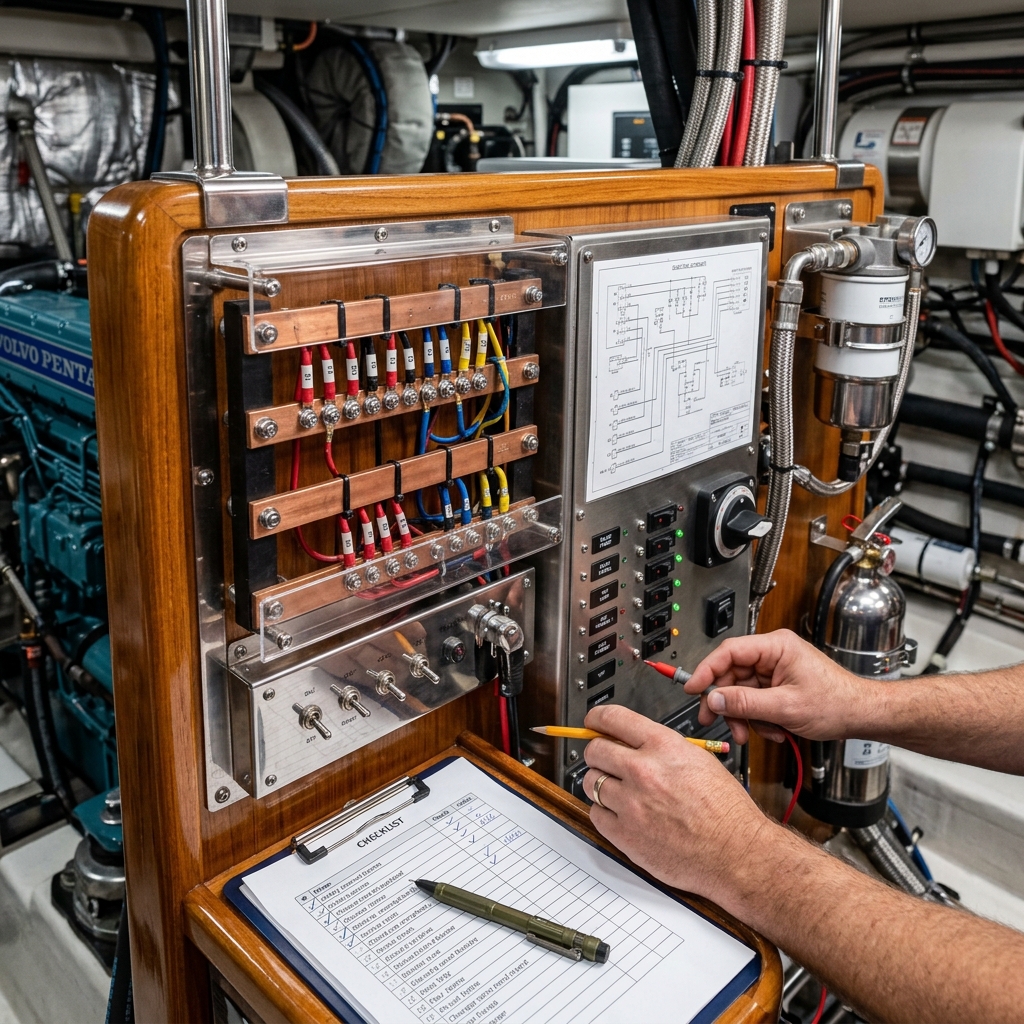
The 30-minute pre-departure check that prevents 90% of trouble
A printable working checklist — engine room, deck, electrical, safety, weather. The owner habits that catch problems before they leave the dock.
Maintenance & Tech
Why Gulf summers ask more of your boat (and how to plan for it)
Heat, humidity, salt, and dust — the combination that defines maintenance in the UAE. A practical primer on what to inspect, when, and why.