
hybrid · propulsion · tech · sustainability
The case for hybrid drives in houseboats — silent overnight, predictable economy
Hybrid diesel-electric installations on houseboats deliver silent overnight operation and meaningful fuel savings. The realistic version: where they win, where they don't.
Hybrid drives — combining diesel propulsion with electric assist — are one of the most-asked-about specifications for new houseboats. The technology is real, the marketing is enthusiastic, and the economics are genuinely good for a specific subset of owners.
The honest version: hybrid drives are a strong choice for some uses, marginal for others. Here's how to tell which one you are.
What "hybrid" actually means on a houseboat
The term covers several configurations. The most common for our market:
Diesel-electric serial hybrid. The diesel engine drives a generator only; an electric motor turns the propeller. This is the architecture most discussed in marketing. Allows pure-electric operation at low speeds.
Parallel hybrid. Diesel and electric motors both connected to the propshaft. More complex; allows both to work together for higher peak power.
Plug-in hybrid. Larger battery bank that can be charged from shore power; allows extended pure-electric operation. The premium option.
For most houseboat applications, parallel hybrid with a meaningful battery bank is the practical sweet spot.
What hybrid does well on a houseboat
Three benefits dominate:
1. Silent overnight operation. With a sufficient battery bank, you can run AC, fridge, lights, and everything else without the generator. For owners who anchor overnight regularly, this is the headline benefit.
2. Slow-speed efficiency. Diesel engines are inefficient at very low loads. Most houseboats spend a significant portion of their cruising time at idle or low-speed manoeuvring (dock approaches, slow exits from marinas, harbour transits). Electric motors do this much more efficiently.
3. Reduced engine cycling. Diesel engines age faster when frequently started, run at low load, then stopped. Electric assist lets the diesel run only when meaningfully loaded — dramatically improving engine longevity.
A typical hybrid 15m houseboat sees 30-50% fewer diesel runtime hours than the same boat with conventional propulsion. Engine maintenance intervals stretch correspondingly.
What hybrid doesn't do well
The trade-offs:
Higher up-front cost. A meaningful hybrid installation adds AED 250,000-450,000 to a 15m houseboat build. Not insignificant.
Limited pure-electric range. Even with substantial battery banks, pure-electric range is 10-25 nm at displacement speeds. Adequate for marina transits and short anchor moves; insufficient for any meaningful cruise.
Complexity. More systems means more to maintain. Hybrid installations need a team comfortable with both diesel and electric — fewer yards have the full skillset, especially in the UAE.
Battery weight. Substantial banks add 200-500 kg. Affects payload and slightly affects fuel economy in cruising mode.
When hybrid makes sense
A practical decision framework:
Strong case for hybrid:
- Boat will be used at anchor frequently (15+ overnights per year)
- Cruising is mostly short legs (harbour transits, day-trips)
- Owner values silence and low-emissions operation
- Build budget can absorb the premium
- Long ownership horizon (10+ years for the economics to work)
Marginal case for hybrid:
- Boat is used mostly marina-side
- Long-distance cruising (Musandam, Doha) is the primary use
- Owner wants simplicity
- Tight build budget
Weak case for hybrid:
- Boat is primarily for charter (operator-handled, not owner-experienced)
- Used occasionally only
- Owner sells before year 7
The economics
For a typical 15m houseboat with regular use:
Conventional propulsion:
- Engine purchase + install: ~AED 280k
- Engine maintenance over 10 years: ~AED 180k
- Generator (8KW) + maintenance: ~AED 120k + 60k
- Fuel over 10 years: ~AED 380k
- 10-year propulsion total: ~AED 1.02M
Hybrid propulsion (with substantial battery bank):
- Hybrid system install: ~AED 580k
- Engine maintenance over 10 years: ~AED 90k (less use)
- Generator (smaller, less use): ~AED 80k + 30k
- Battery bank (lithium): ~AED 80k + replacement at year 8-10: another 80k
- Fuel over 10 years: ~AED 240k (less)
- 10-year propulsion total: ~AED 1.18M
Hybrid is roughly AED 160k more expensive over a 10-year ownership. About 16% premium. Not free.
But the qualitative benefits — silent nights, reduced engine wear, lower emissions — are real and have value beyond the dollar number.
The "silent night" calculation
For owners who anchor regularly, the silent-overnight benefit alone often justifies the hybrid premium. Specifically:
A conventional houseboat running its generator at anchor has the genset running 8-12 hours per night. Even with sound-shielded marine generators, you can hear it from anywhere on the boat, and you can hear it from neighbouring boats.
A hybrid boat with a properly-sized battery bank runs silently for 12+ hours. The next morning's first sound is wind or birds, not a generator coming online.
This is genuinely transformative for the experience. Owners who try a hybrid boat for one weekend often want one before the weekend is over.
What to specify in a hybrid build
If you're going hybrid, the things that matter most:
Battery bank size matters more than motor power. A small motor with a big battery is better than a big motor with a small battery for typical houseboat use. Aim for 30-40 kWh of usable capacity for a 15m boat.
Solar integration. Hybrid systems and solar pair perfectly — solar tops up the bank during the day, the bank runs everything at night. Spec solar simultaneously.
Generator sizing. With hybrid + solar, you can usually go smaller on the generator than you would otherwise. Smaller genset = less fuel, less weight, less maintenance.
Charge management software. The brain of the hybrid system. Specify a quality marine-rated controller with smartphone monitoring. Cheap controllers cause headaches.
Service support. Choose a hybrid system with UAE-based service capability. Repairs that require shipping parts from Europe and a flying-in technician are expensive.
What "hybrid-ready" means
Some new builds offer "hybrid-ready" specifications without the full hybrid install. Typically this means:
- Engine room sized for future electric motor installation
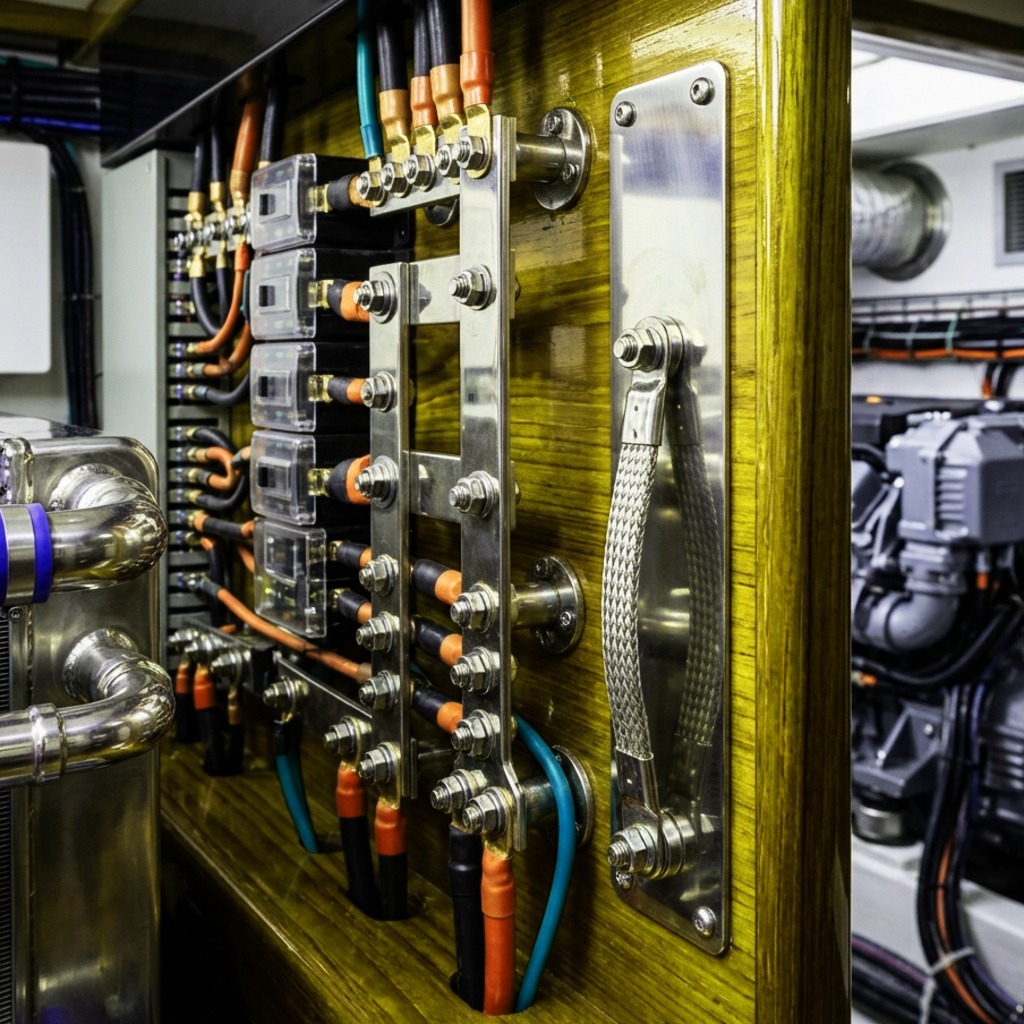
- Wiring and bus bars sized for hybrid currents
- Battery compartment sized for future expansion
- Software architecture compatible with future hybrid controller
This is a reasonable middle ground for buyers who want to defer the decision but not foreclose it. The "hybrid-ready" premium adds maybe AED 25-40k to the build but doesn't lock the owner in.
Maintenance reality
Hybrid systems need a different maintenance approach:
- Annual: Battery health diagnostic, electrical system audit, motor inspection
- Bi-annual: Battery balancing, controller firmware updates
- As-needed: Specific component replacement (motor brushes, capacitor banks)
The total maintenance hours over 10 years is similar to conventional propulsion — the work is just different (more electrical, less engine).
Where the technology is heading
Hybrid marine technology is improving rapidly. The system available now is meaningfully better than the system available 3 years ago, both in efficiency and in cost. We expect another 20-30% improvement in cost-to-performance over the next 5 years as battery and motor technology continues to mature.
For owners not in a rush, this is an argument to defer. For owners building now, the technology is ready and proven.
What we recommend for new builds
Our default new-build recommendation for owners with the budget: hybrid with substantial lithium banks and 2-3 kW solar. The combination handles most realistic use patterns silently, efficiently, and with reduced maintenance overhead.
For owners on tighter budgets: conventional propulsion with hybrid-ready architecture, allowing later upgrade.
For owners primarily focused on long-range cruising: conventional propulsion. The hybrid premium doesn't pay back if you're crossing the Gulf rather than anchoring in it.
The right answer is highly use-dependent. The honest answer matters more than the marketing answer.
Have questions on anything in this piece? Send a note via /contact — we read every reply.
Written by
The 101Marine team
Field notes from the team that designs and builds 101Marine houseboats. We write when we have something practical to share.
More from Maintenance & Tech
See all →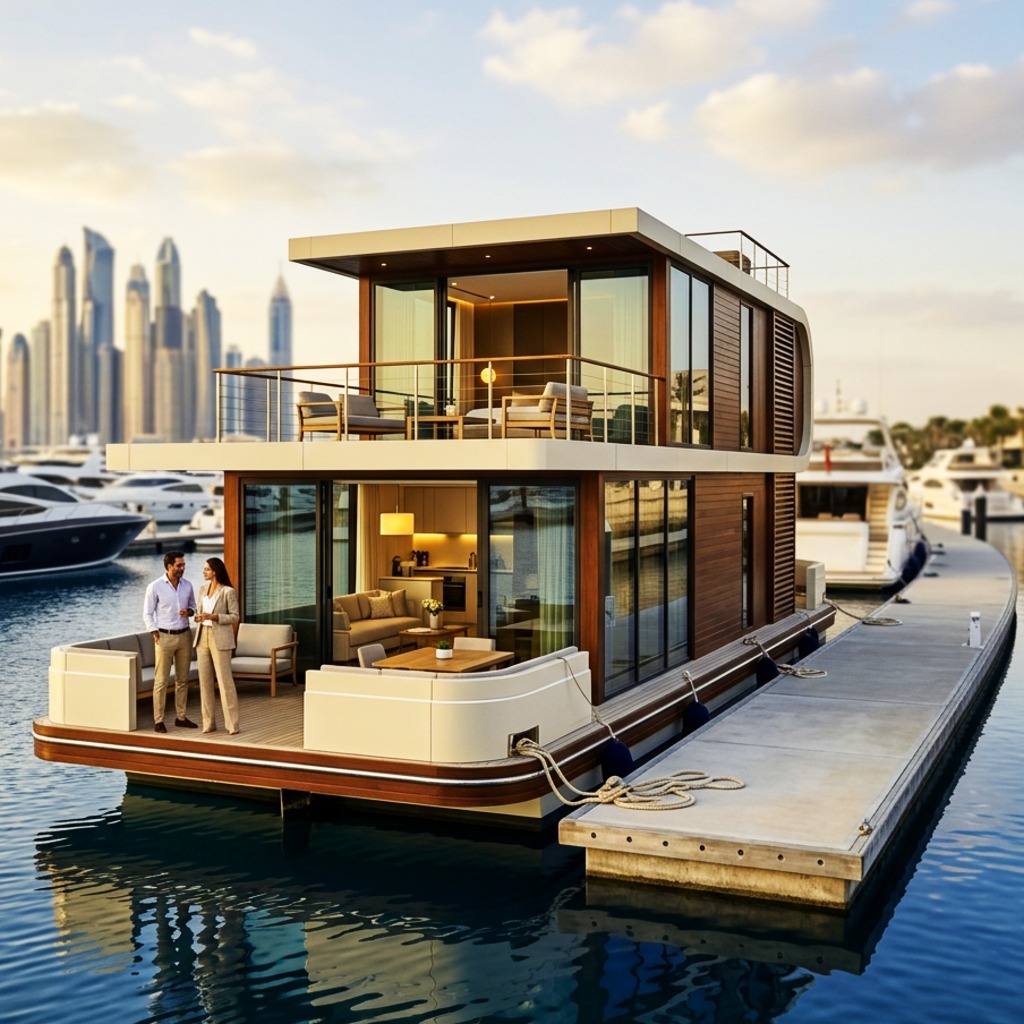
Maintenance & Tech
Wood, gel coat, leather, fabric — what survives the Gulf, what doesn't
Material specification on a UAE-bound houseboat is a different problem than in temperate climates. Heat, UV, salt, and humidity reward some choices and punish others quickly.
Maintenance & Tech
The 30-minute pre-departure check that prevents 90% of trouble
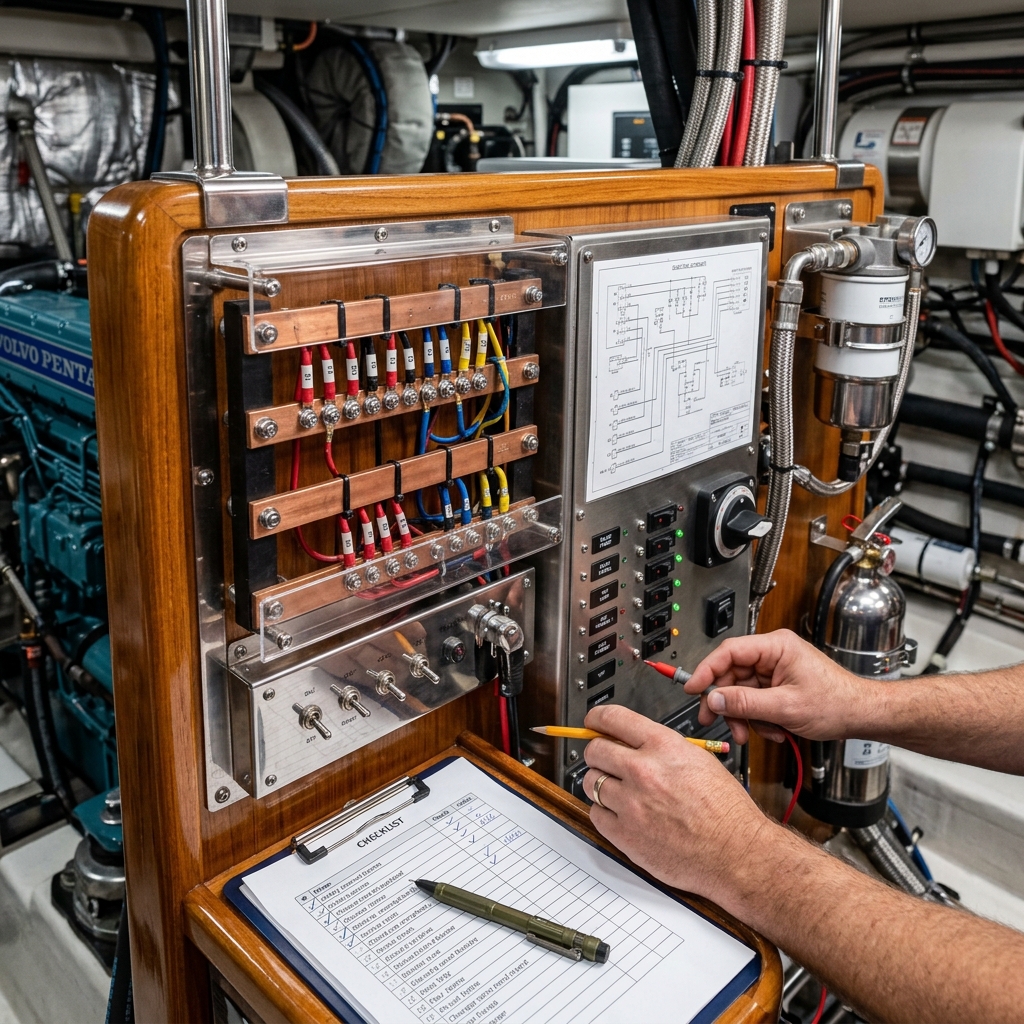
A printable working checklist — engine room, deck, electrical, safety, weather. The owner habits that catch problems before they leave the dock.
Maintenance & Tech
Why Gulf summers ask more of your boat (and how to plan for it)
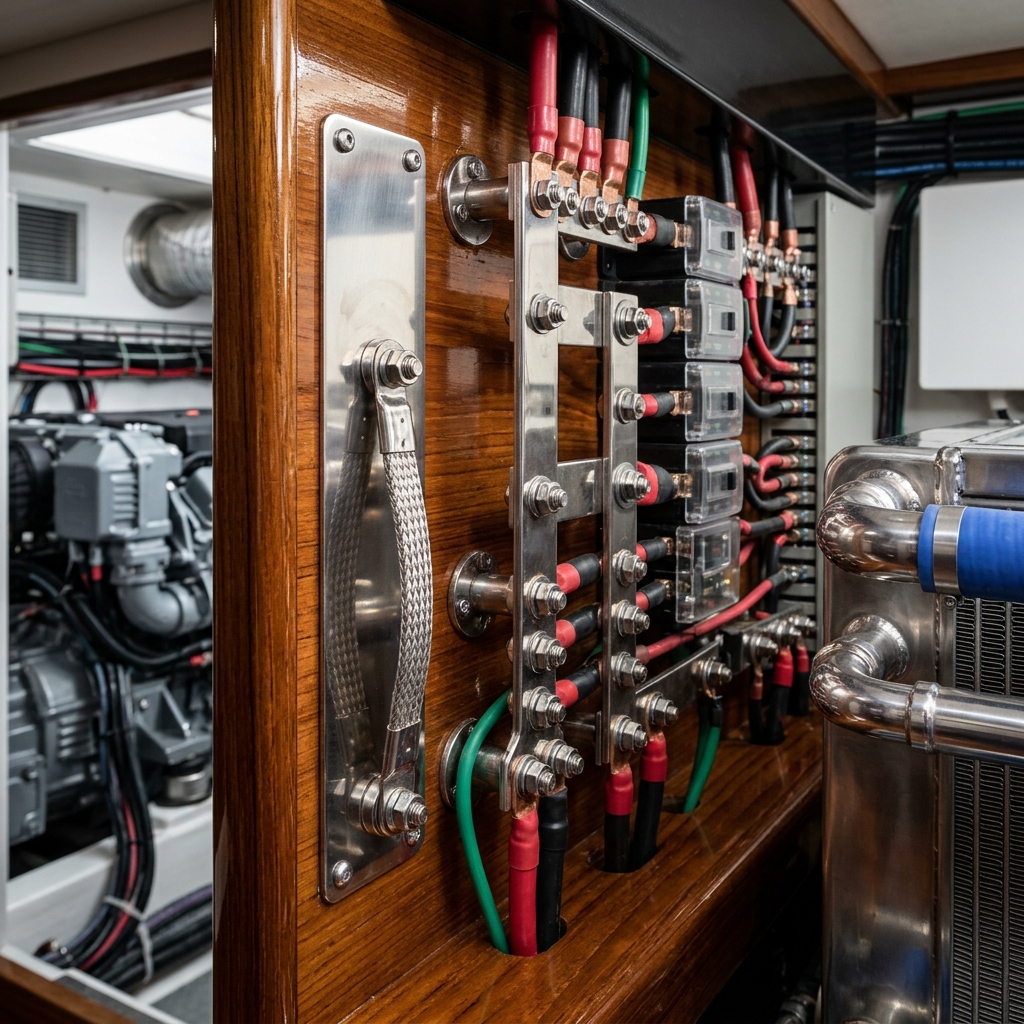
Heat, humidity, salt, and dust — the combination that defines maintenance in the UAE. A practical primer on what to inspect, when, and why.